A fan is an object used to induce a current of air for cooling purposes or to fan the embers of a fireplace. The use of fans is attested since ancient times. The fan is also used as a weapon in certain Chinese martial arts.
In feudal Japan, the warlord (the shogun) carried a gunsen (literally "war fan"): this type of fan had a forged steel frame and served both as a rallying and direction sign for the troops (brandished open), and as a guard and protection (once closed) during a sword fight. The tessen, more European in shape, was rather reserved for women. It was used in tessen-jutsu combat.
Tessen-jutsu is the art of the war fan that the Japanese high nobility developed to be able to defend themselves at the court of the Shogun, where one only came unarmed.
As with any topic these days, there are endless controversies on the internet regarding the effectiveness and even the existence of this weapon, with completely crazy arguments like, "It's stupid to be interested in this, what do you do when faced with a revolver?" (Oh, well, yes, of course... except that this applies to all martial arts and all bladed weapons that aren't throwing weapons!).
In short, let it be clearly stated here that my approach is purely aesthetic. The idea is to learn sequences of fluid and graceful movements, not to pick fights at night in parking lots! So, nothing's stopping you from following me with a simple "basic" fan since we're not going to hit with it!
Below you will find a sequence of movements that follow one another. I try to describe them precisely, but the important thing is to find your own sequences, the important thing being fluidity in moving from one posture to the next, as well as balance. It is through the repetition of the sequences that you will achieve the fluidity necessary for the beauty of the exercise.
The sequence begins standing, back straight, arms at your sides, fan held in your right hand. (A)
Spread your left leg and raise your arms horizontally. (B).
Then bring your hands together in front of your torso. (C)
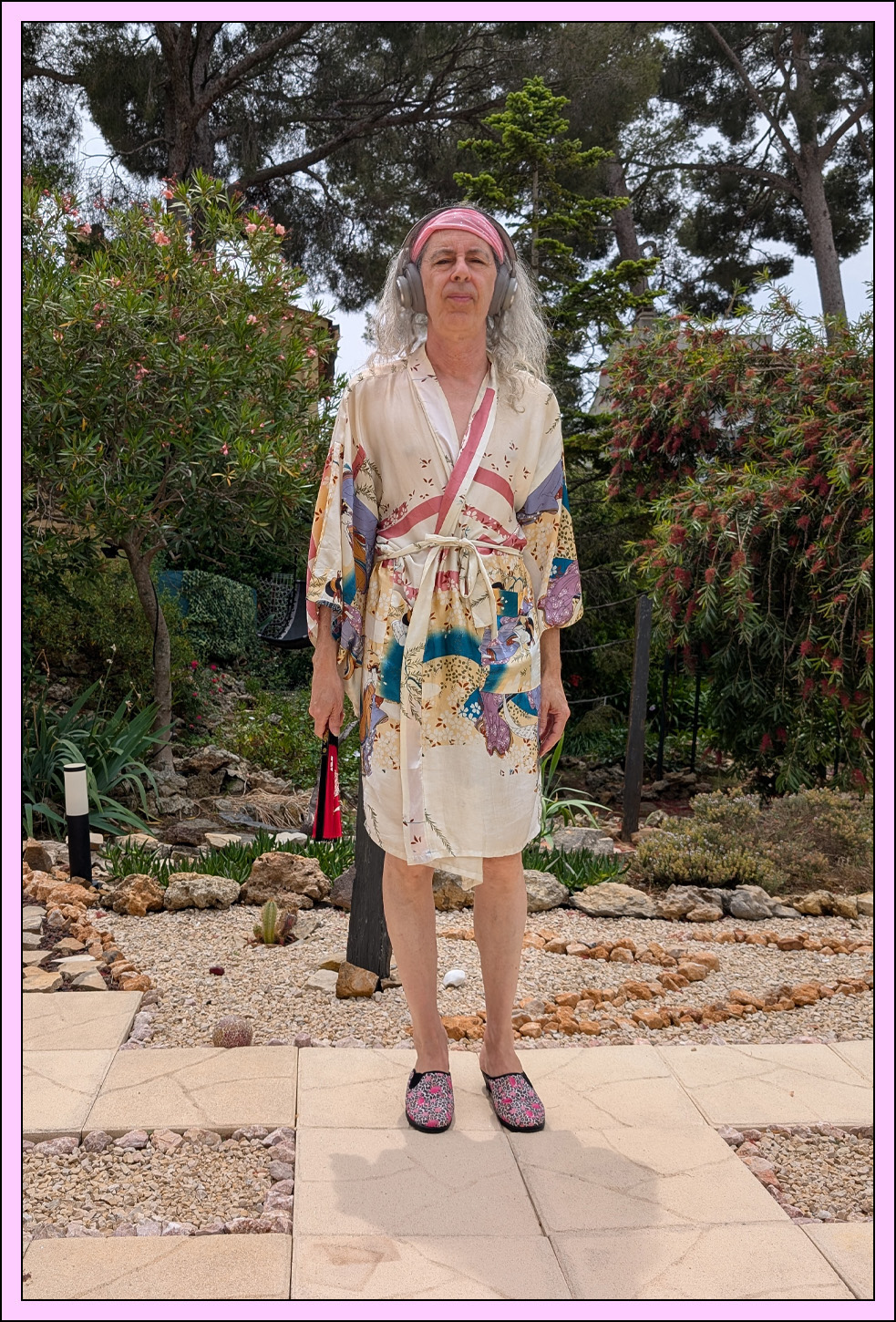 |
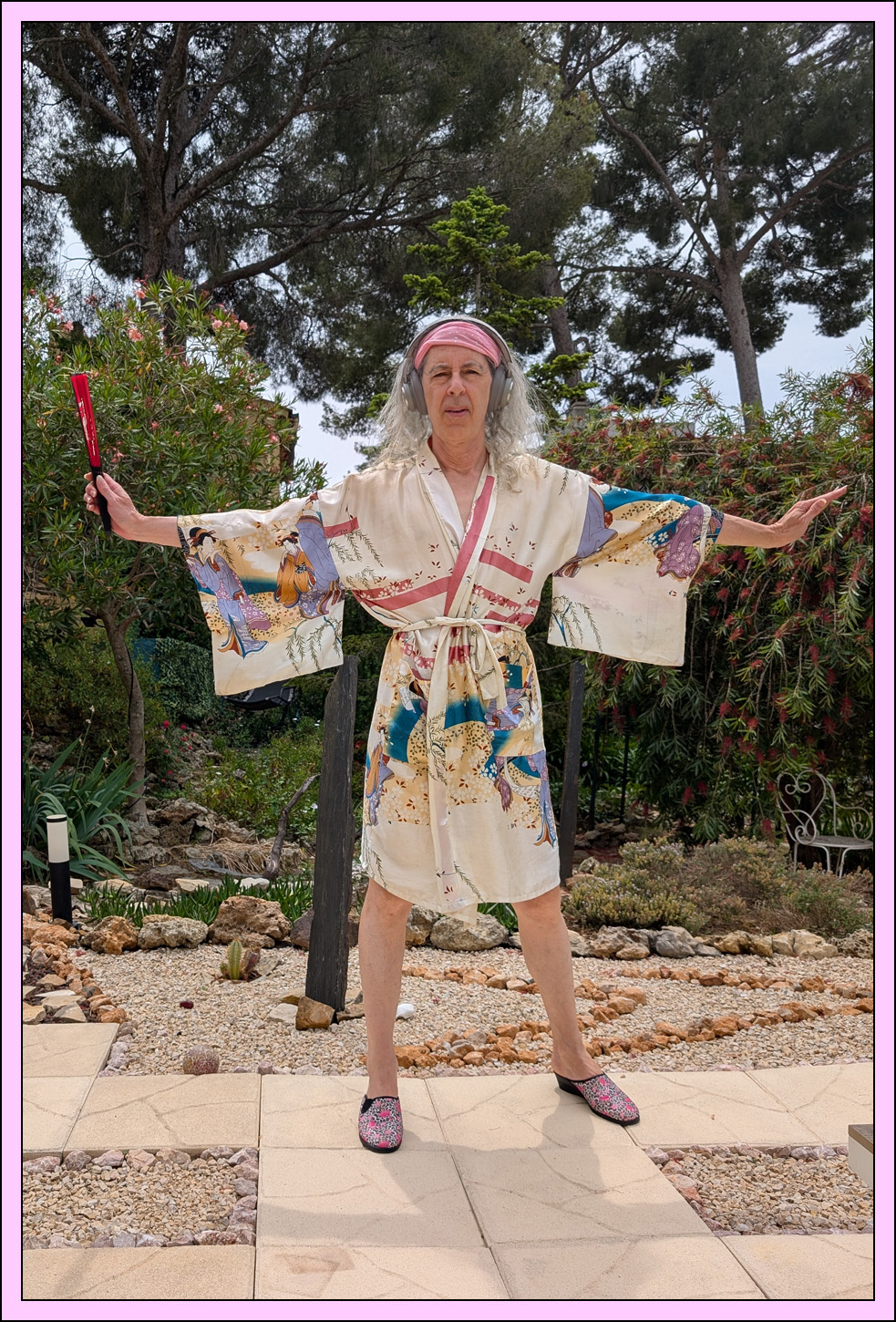 |
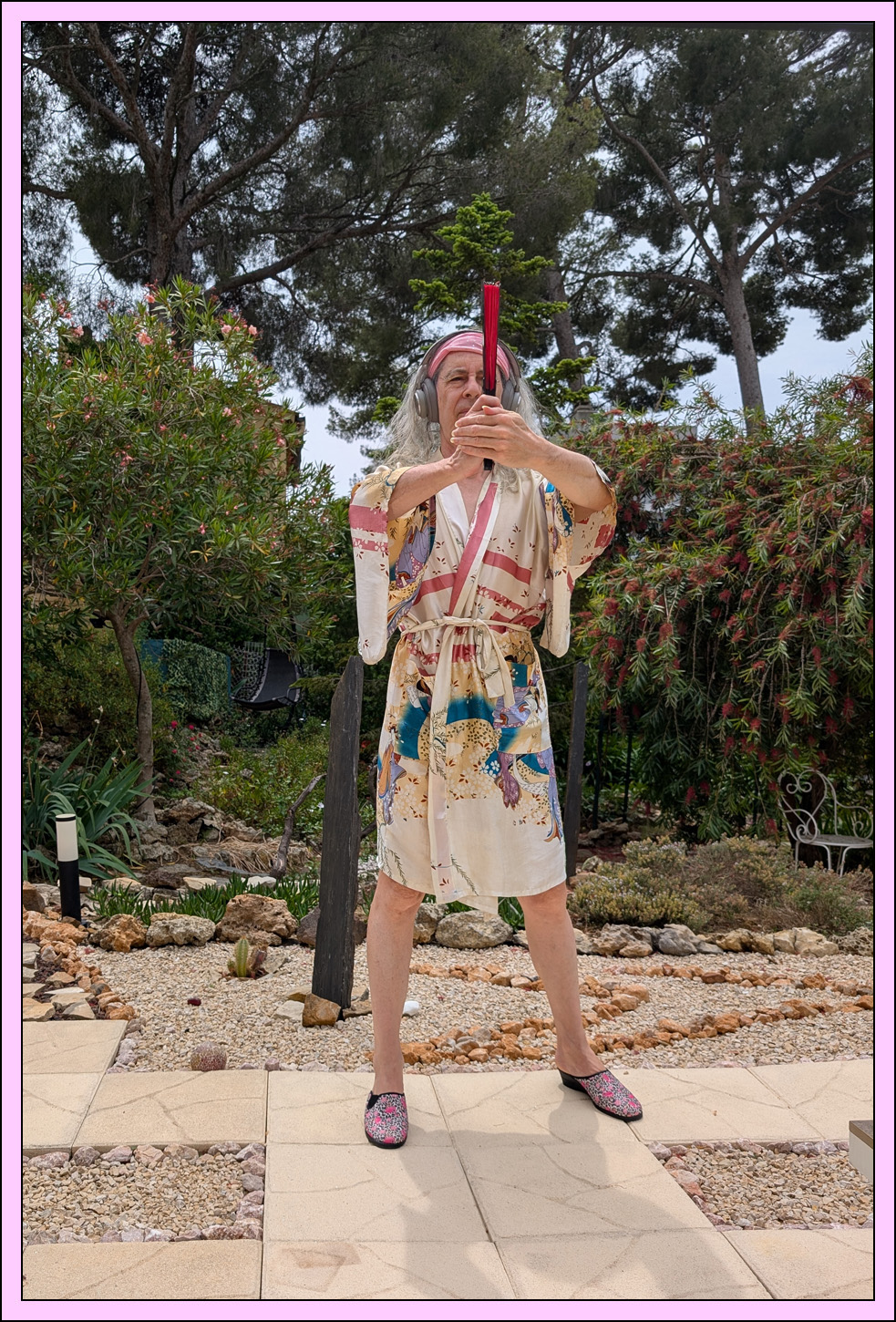 |
||
| A | B | C |
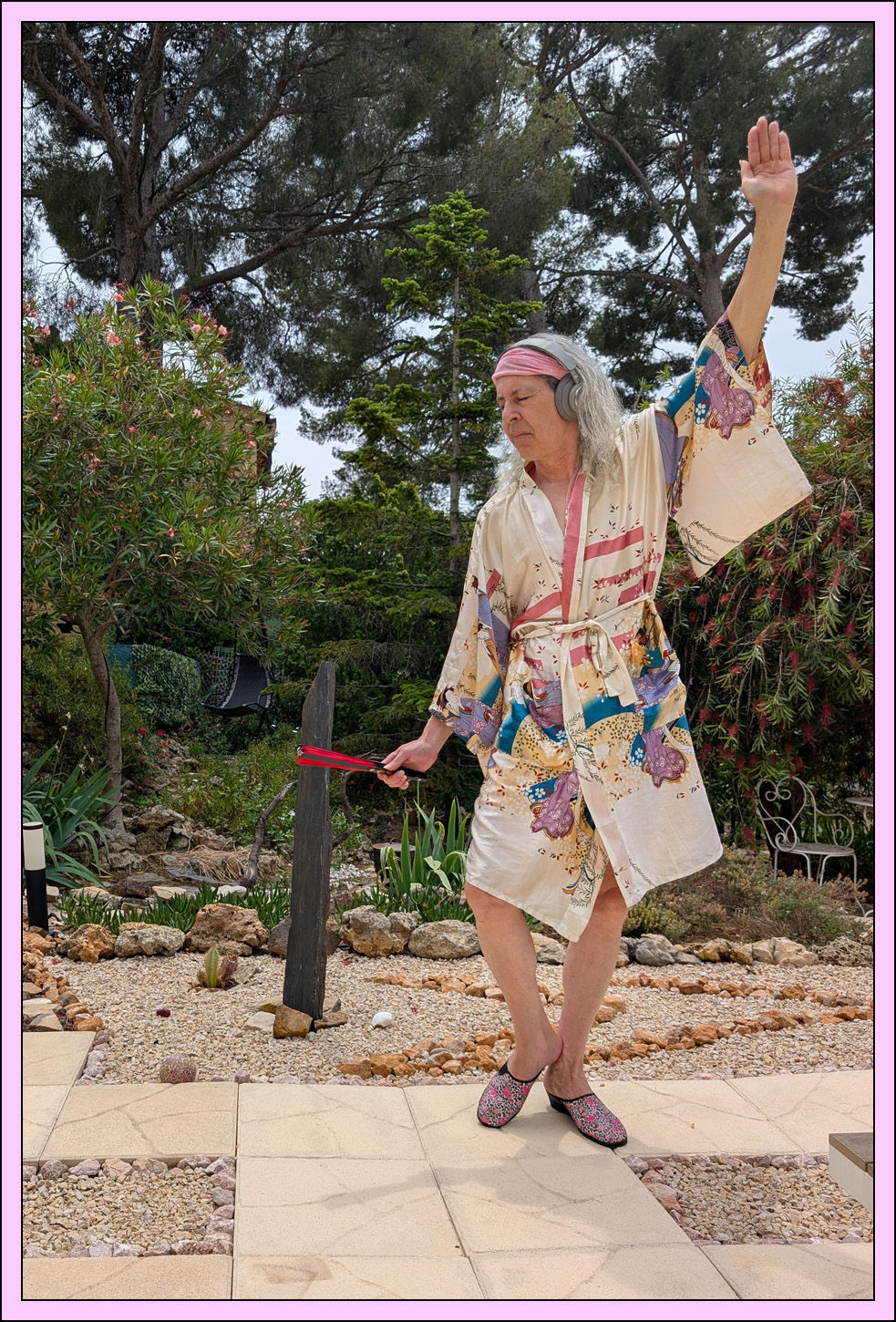
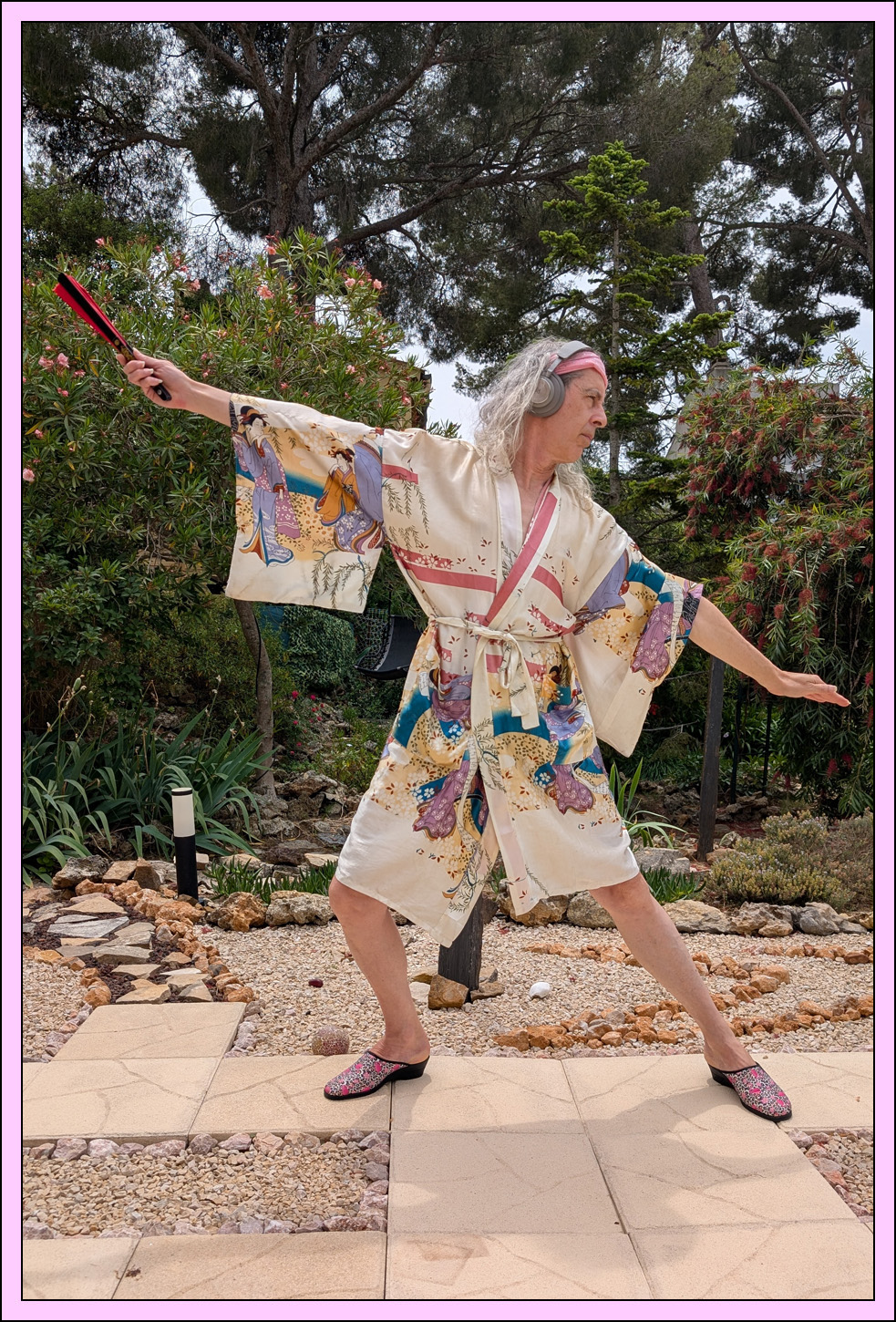
While slightly bending the left knee, raise the fan above the head while the left arm moves downward in the opposite direction (A)
Move the arms in a rotating motion, bringing them horizontally, then the left arm toward the sky and the right arm down. At the end of this part of the movement, bring the right foot back to the left. (B)
Finish the transition by sending the right leg straight to the right, then bending it, supporting your weight on it while the left leg stiffens. At the same time, the right arm is raised, the left is lowered, and the gaze shifts from right to left. (C)
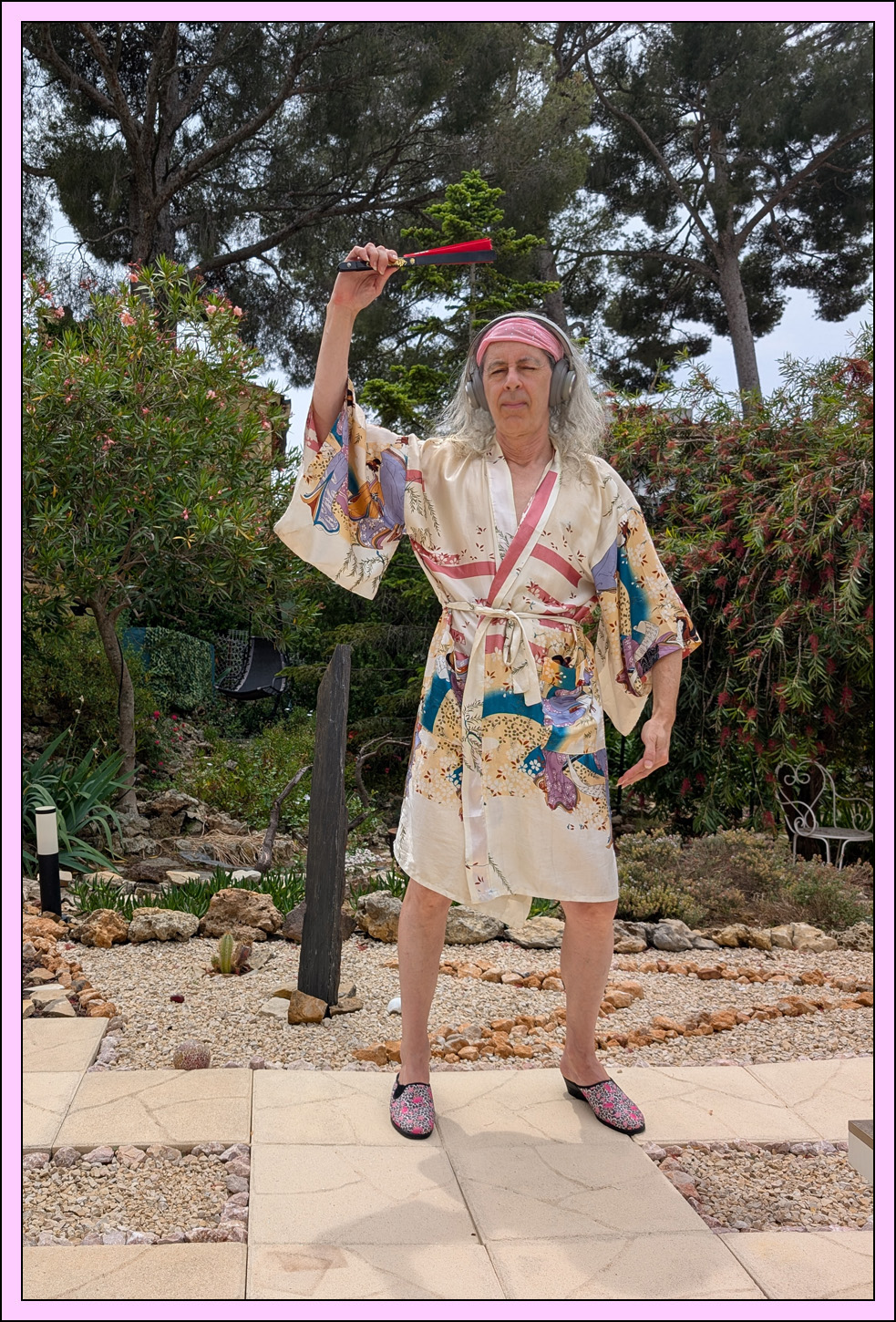 |
 |
 |
||
| A | B | C |
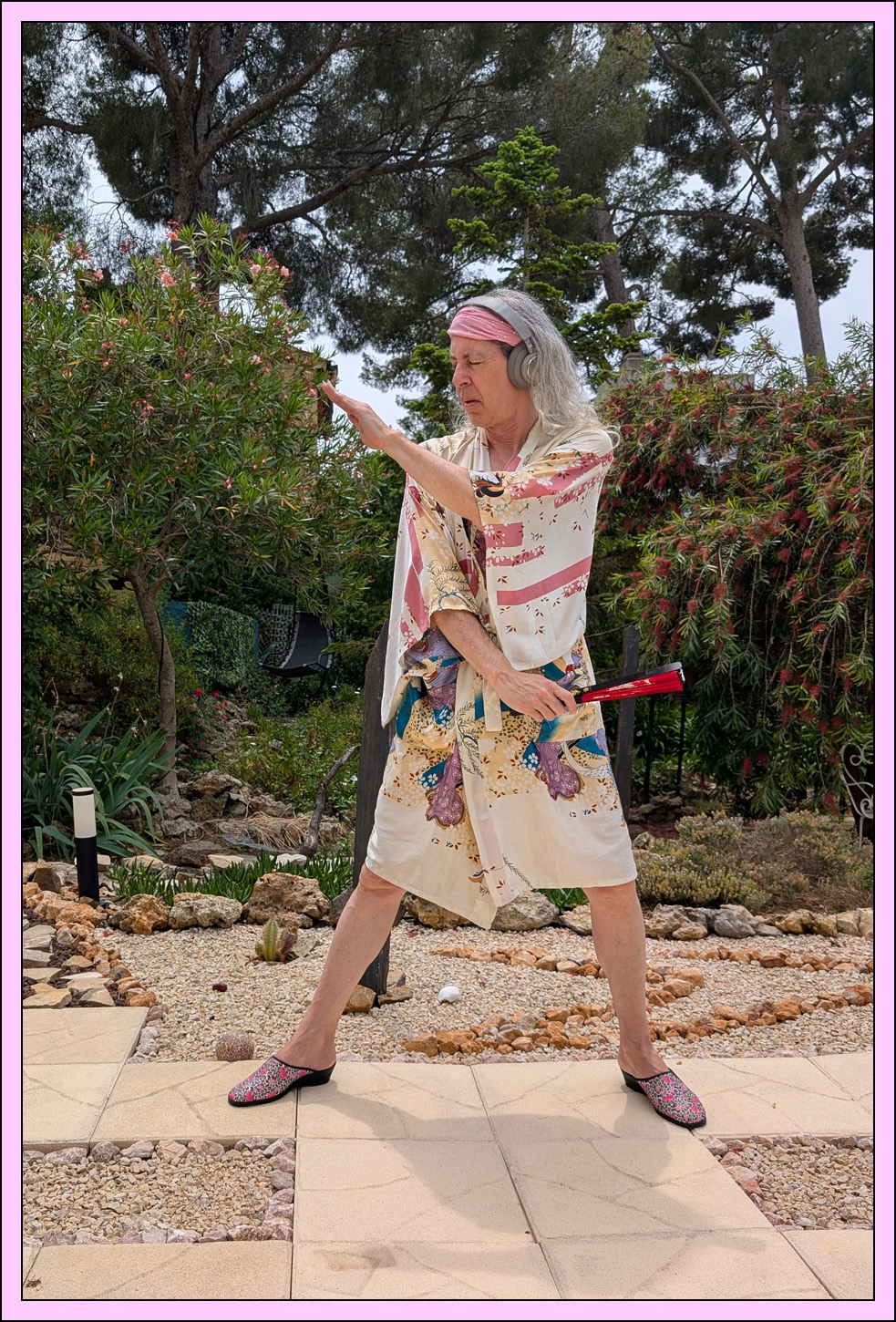
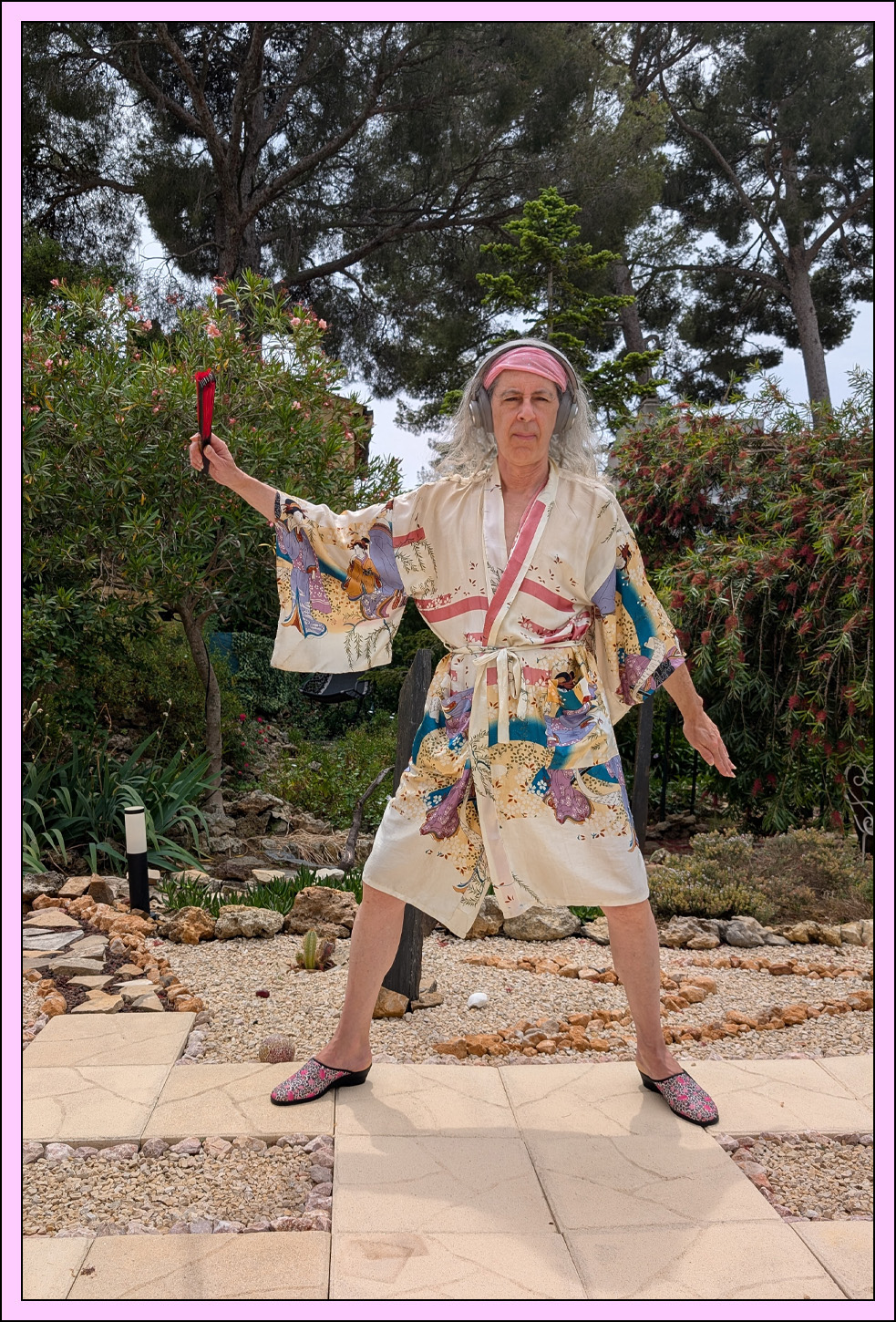
As we shift our weight back onto both legs, our left hand will rise obliquely, extending above our right hand, which performs the opposite movement. Our gaze is directed to the front right. (A)
A rotation of the right wrist begins a movement that will bring the right arm upward while the other arm continues its rotational movement. The gaze and shoulders move forward. The transition is completed when the right arm is upward. (B)
Then we lift the left foot, which moves closer to the right without touching it before moving forward. At the same time, the left hand returns to waist level and the right hand moves forward to open the fan with a sharp movement in front of the face. (C)
 |
 |
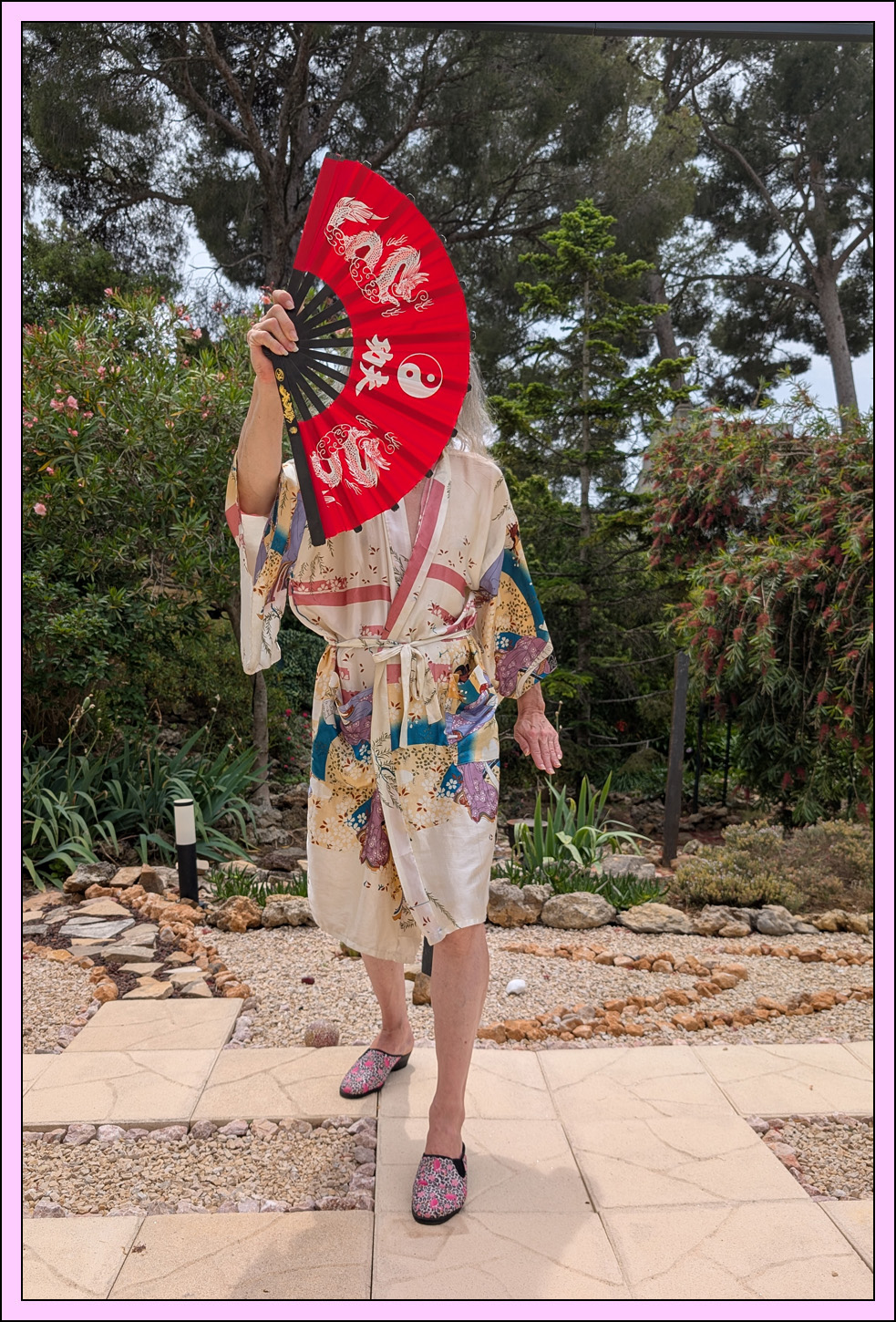 |
||
| A | B | C |
