Disclaimer: We're only talking about styles that aren't too "unusual" here. More extreme and/or extravagant styles, those that are more "costume" than dressed up for going out on the town, can be found in the "Cosplay" section!
Warning 2: Some styles are associated with a country or region (Asian Style, Western...). This does not mean, of course, that all people from that region dress the same! The concept here is based on using elements that seem typical of the region in question. Note my choice of words: "that seem to us". If we imagine here that Texans all wear cowboy boots, we will use cowboy boots for a 'Texas style', even if in reality the majority of Texans wear sneakers or dress shoes!
| Asian Style (Voir) | Boho Style (Voir) | British Style (Voir) |
| California Style (Voir) | Casual Chic (Voir) | Rock Goth (Voir) |
| Smart Casual (Voir) |
The "Asian style" refers to an aesthetic or approach inspired by Asian cultures. This can include classic shapes such as the Mao collar, the Japanese Kimono or the Chinese Qipao dress, visuals linked to Asia such as Geishas or Chinese and Japanese characters, a style inspired by great Japanese couturiers or even outfits reminiscent of manga or Japanese schoolgirls (short skirt, knee-high socks...).
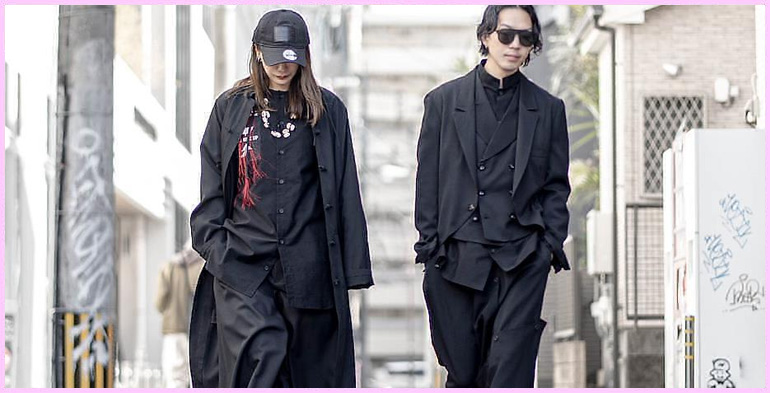
Japanese designers excel at reinterpreting traditional codes, such as the typical sleeves of kimonos, with a contemporary sensibility. They also appreciate contrast, as seen here between a colorful top and an entirely black skirt, the two linked by the use of delicate black lace.
Asian style also incorporates the codes invented by the Japanese designers Yohji Yamamoto and Rei Kowakubo, soon followed by Kenzo Takada and Issey Miyake. It represents a form of counterculture applied to fashion, in that its aesthetic contrasts with those of the various dominant classical styles. The volume of each garment is free from the shape of the body it covers, and the torso is elongated by the long shirt. The color palette is very limited. Black is the dominant color, as is often the case in this style. All of this is linked to the Japanese concept of Wabi-sabi, which is to see beauty in all things worn, broken, or imperfect, imperfection being inherent to all things natural. For example, one could pair very wide linen trousers with a black linen shirt or with a white lace summer blouse. Long overcoats in lightweight fabrics are also frequently seen.
Among the classics of Asian Style there is of course the short skirt, often pleated, with small white ankle socks in summer or knee-high socks in winter.
In summer, a T-shirt with an Asian-inspired design or a linen Mao-collar shirt, paired with linen shorts, perfectly embodies the concept of "wabi-sabi," which celebrates imperfection and simplicity. Complete the look with loafers and a light-colored cap.
Boho style is characterized by its ethnic influences and love of natural materials. The predominant colors in bohemian style are earth tones, such as brown, beige, and terracotta, which evoke nature and bring a feeling of warmth and comfort. The style also allows for color, but it must be in the tertiary range, meaning softer colors such as pale pink, sky blue, and mint green.
When it comes to accessories, we opt for eye-catching pieces, like a wide, low-slung belt. It will add dimension and personality to your outfit, especially if you're wearing flowing garments. Wide-brimmed hats, floral headbands, pearl necklaces, and leather bracelets are essential for a carefree, bohemian look. Bandanas and scarves can also be worn in various ways: as headbands, tied around the neck, or even as bracelets. These small details will make your look even more interesting and complete.
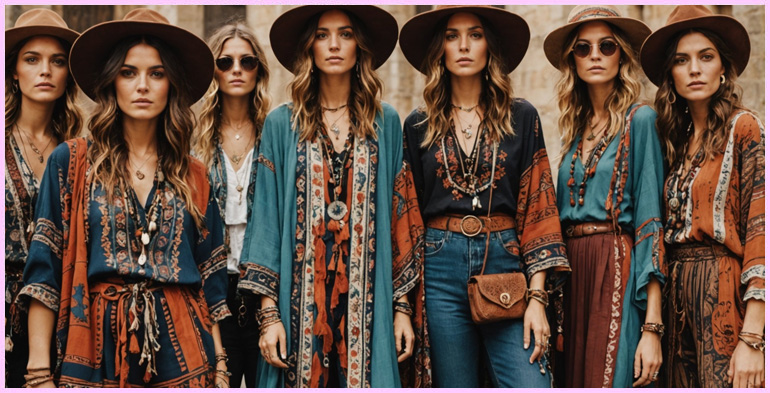
This style originated in 19th-century Paris. At that time, a group of artists and intellectuals rebelled against the rigid and very conventional lifestyle of the rest of the bourgeoisie, using outdated clothing with new and daring combinations.
In the 1960s, the hippie movement embraced the Boho look. Their desire for a free life, without restrictive guidelines or labels, led them to contrast the capitalist West with an idealized East. This is why the style incorporated denim, the working-class fabric of the time, Native American-inspired pieces (fringed jackets, jewelry), and of course, items from India (this was the heyday of pilgrimages to India and Nepal).
Since the 1990s, boho-chic has made a strong comeback with better quality pieces, better cut and less "bright" than the colors and patterns of the hippie era.
In summer you can pair a mini blue denim short (Blue Jean) with a 'Hippie'n style crochet or lace top or a coloured cotton short and a white T-shirt, a cap whose colour echoes that of the shorts and matching espadrilles.
British style in fashion is that almost magical way the English have of looking simultaneously elegant, eccentric, and nonchalant, as if they'd thrown on the first thing they found, except that everything fits perfectly. In practice, it's based on a few well-established codes. There's a strong emphasis on quality, perfectly tailored suits, checked blazers, and Burberry trench coats. Often, there are improbable combinations, like pairing a hunter's tweed with a floral shirt or Doc Martens with a tartan skirt. Contrast is practically a religion. You can also add a touch of "chic nonchalance": tousled hair, slightly messy hems, and oversized sweaters. Nothing is too polished, otherwise it's no longer English.
As the Industrial Revolution swept through Britain, it brought innovations in textile production such as mechanized looms and advanced dyeing techniques that enabled the creation of fabrics that were both robust and refined, most notably the iconic tweed. This sturdy woolen fabric, with its distinctive patterns and earthy hues, became a cornerstone of the country wardrobe, embodying both practicality and sophistication. The iconic Harris Tweed, handwoven in the Outer Hebrides, represents the pinnacle of tweed craftsmanship. A classic tweed jacket features a three-button front, notched lapels, and flap pockets.
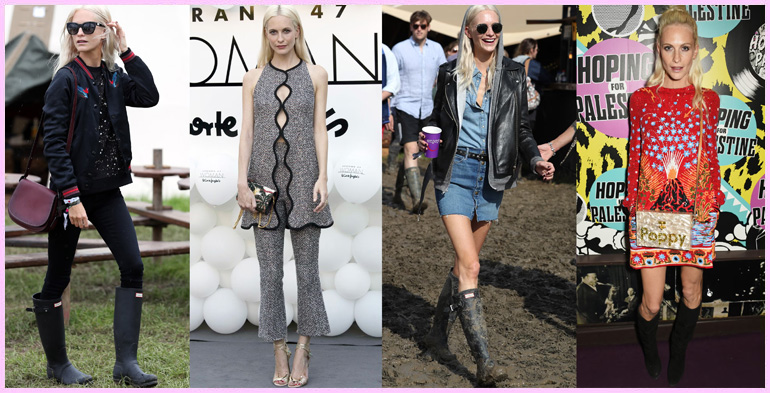
British weather demands adaptability. To stay comfortable throughout the day, you need to know how to layer vests, jumpers, and jackets. The preferred headwear is the flat cap. The tweed jacket is almost always complemented by the waxed cotton coat, an essential outerwear item popularized by British brands like Barbour. These country coats have a waxed cotton outer layer that repels water while allowing for breathability.
Patterns and textures are often based on checks, stripes, tartan, velvet, wool, and leather. All of this is frequently in muted tones (camel, navy, burgundy, gray) with a striking detail. Finally, the punk and rock heritage should never be overlooked: the rebellious touches of Vivienne Westwood, leather, pins, and boots. Even in the most demure outfits, a hint of irreverence is often found. British style can also be expressed through colored trousers (red, mustard, etc.) and a matching cap. One can wear a polo shirt or a T-shirt that clearly celebrates England (a famous band or the Union Jack, the British flag).
California fashion is casual, trendy, and original. Every California woman owns a pair of denim shorts, ripped skinny jeans, or overalls. Denim plays a big role in California fashion, which is why custom denim jackets have become so popular in California.
In California, everyone, everywhere, wears sneakers. These shoes aren't just for pairing with pants and a t-shirt. They work just as well with shorts, skirts, and dresses, allowing you to create outfits that are more or less dressy.
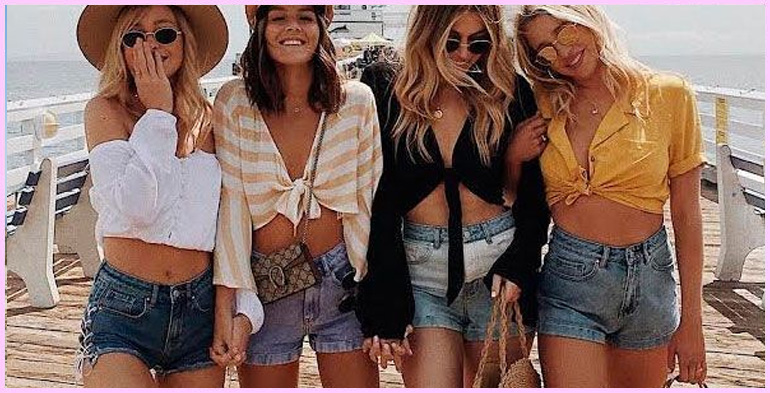
In summer, Californian fashion rhymes with denim mini-shorts and sleeveless tops, even swimsuit tops. Californian women wear cheerful colors, ranging from bright fuchsia to buttercup yellow and pink.
The "Casual Chic" style is an art form in itself. It consists of mixing elegant pieces with casual clothing to create an outfit that is both refined and relaxed. There are two possible levels of this mix: the first, where the casual element takes precedence over the "formal," is Casual Chic; and the second, called Smart Casual (the latter being less formal than a suit and tie or a tailored suit, of course).
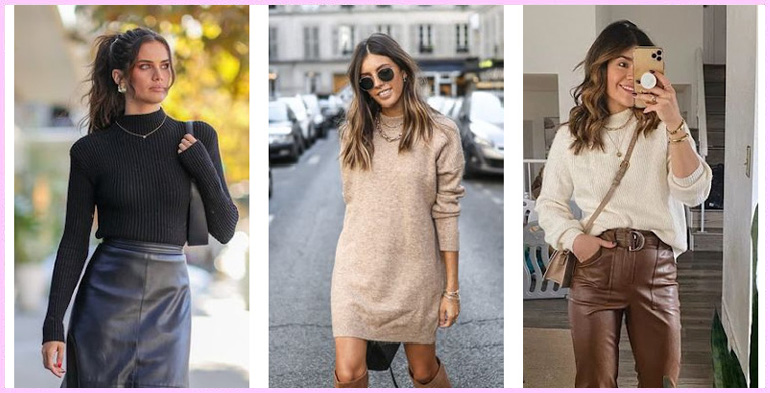
This style offers versatility that works equally well in the office (if the dress code allows) and for nights out. The key to a successful casual chic look lies in a clear contrast between dressy and casual elements, avoiding the trap of being neither truly chic nor truly casual.
For example, you can pair jeans with a nice designer shirt or with a thin blouse and a leather jacket. Another example would be to pair beige chinos with a linen mandarin-collar shirt.
Gothic style is a cultural movement that emerged in the late 1970s in Great Britain. It was initially associated with rock music and punk, but quickly expanded to include a variety of artistic forms, including fashion, literature, and film.
In her article for the New York Times, Cintra Wilson states that "the origins of contemporary Gothic fashion lie in the Victorian cult of mourning." Gothic fashion is often recognized by its predominantly black clothing and references to the occult and vampires.
Gothic fashion is expressed in all its exuberance at specific, one-off events such as parties, concerts, or festivals. The quality of the fabrics is high to avoid the "carnival Dracula" look. In everyday life, most people adopt a more understated aesthetic based on black clothing complemented by a few accessories.
The origins of this style are difficult to trace. While some claim it dates back to the 1980s, others date its origins to the United States in the 1920s. In any case, it is a relatively recent movement in clothing. It emerged from the workplace, where the business dress code gradually relaxed in favor of a more relaxed look. It then colonized everyday life. It is important to keep in mind that in the last century, our grandparents dressed carefully not only for work, but also for everyday life, especially Sunday outings (hence the term "s'endimancher," which means to dress carefully). The smart casual style, half-dressed, half-relaxed, is the result of this evolution. It reflects the desire not to wear a formal look every day, without compromising on style, while still gaining in comfort.
A smart casual look can be more or less formal, depending on the intention behind it. If you choose to wear a blazer, a flannel shirt, dress pants or chinos, and dress shoes, then your appearance will be more dressy (or smart); conversely, if you choose a blazer, jeans, a polo shirt, and a pair of sneakers, you will be closer to casual and we then speak of "Casual Chic."
