- 1970's -
The 1970s marked the end of the carefree spirit of the sixties; the bell tolled for the "Thirty Glorious Years." The Vietnam War (1955-1975) continued to claim victims, Bloody Sunday bloodied Northern Ireland in 1972, and the oil shocks of 1973 and 1979 plunged the West into economic crisis. The younger generation questioned, took a stand, and fought back. The mood was one of pacifism, but a vindictive one.
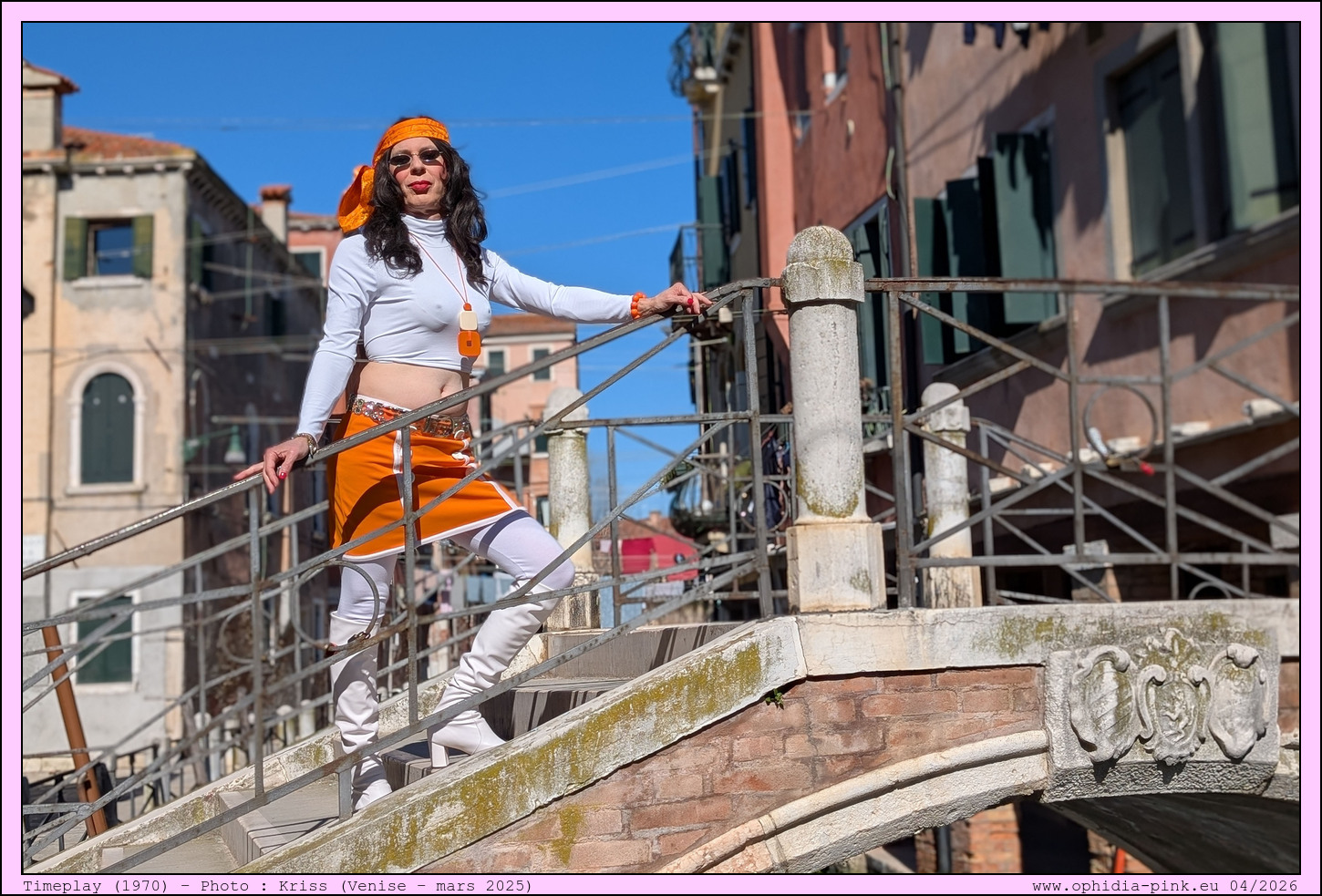
After the experimental 1960s, characterized by straight, textured fabrics, the 1970s yearned for lightness and carefree abandon. One word, and one word only, to remember: fluidity. Anything that allowed the body to breathe and express itself was in vogue. Beginning in the late sixties, the era of the hippie movement and the "baba cool" took hold, championing a body free from all constraints, including those of clothing.
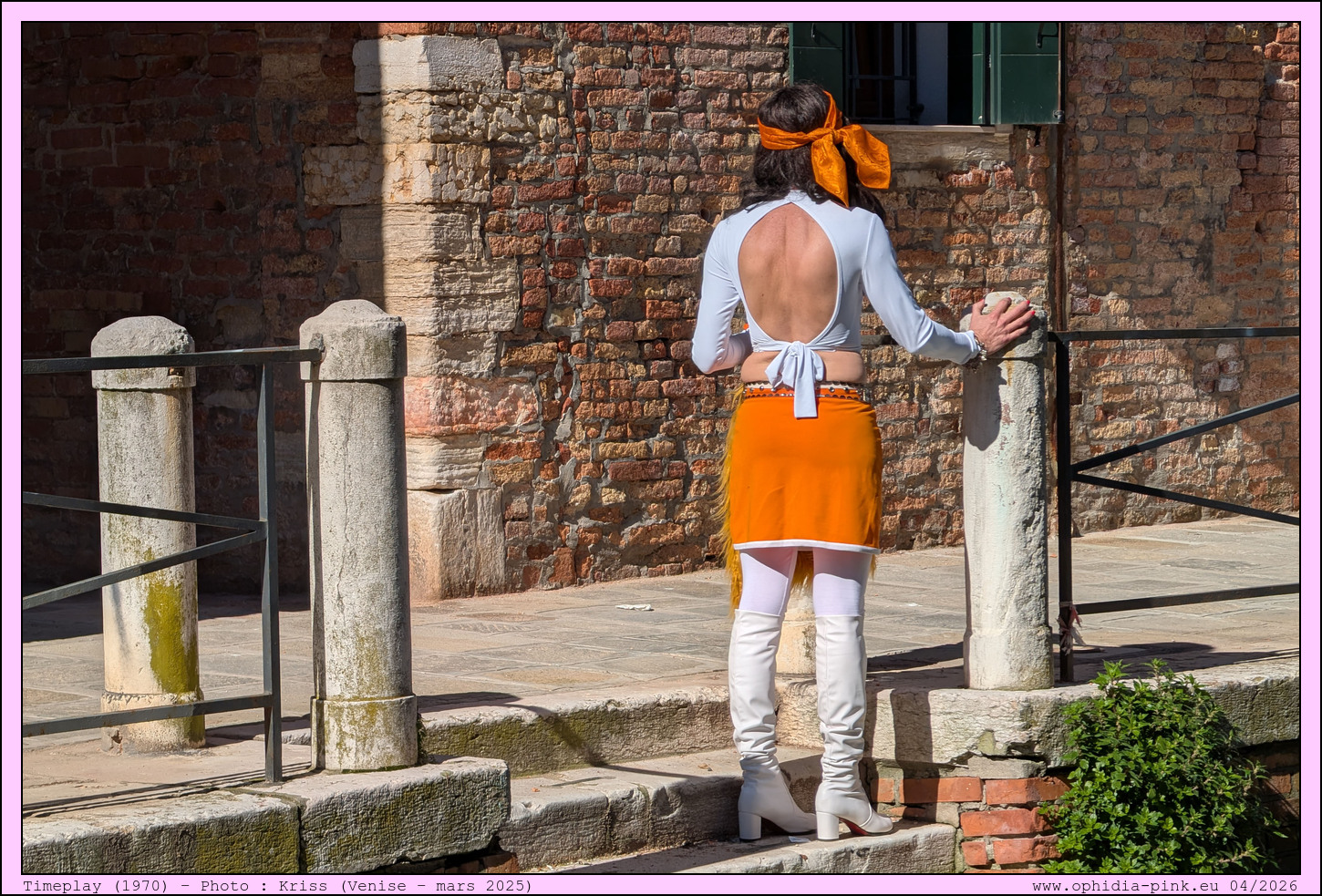
Ask anyone to sum up the 1970s in a single color. Nine times out of ten, the answer will come quickly, obvious and unanimous: orange. Not a timid or pastel orange, no. A bold, saturated orange, bursting with energy. Psychologically, it's a warm, sociable color that blends the passion of red with the cheerfulness of yellow. It's synonymous with energy, creativity, and communication. In the context of the late 1960s and early 1970s, it became a true manifesto, the banner of a rapidly changing era, the symbol of a joyful and audacious break with the conformism of previous decades.
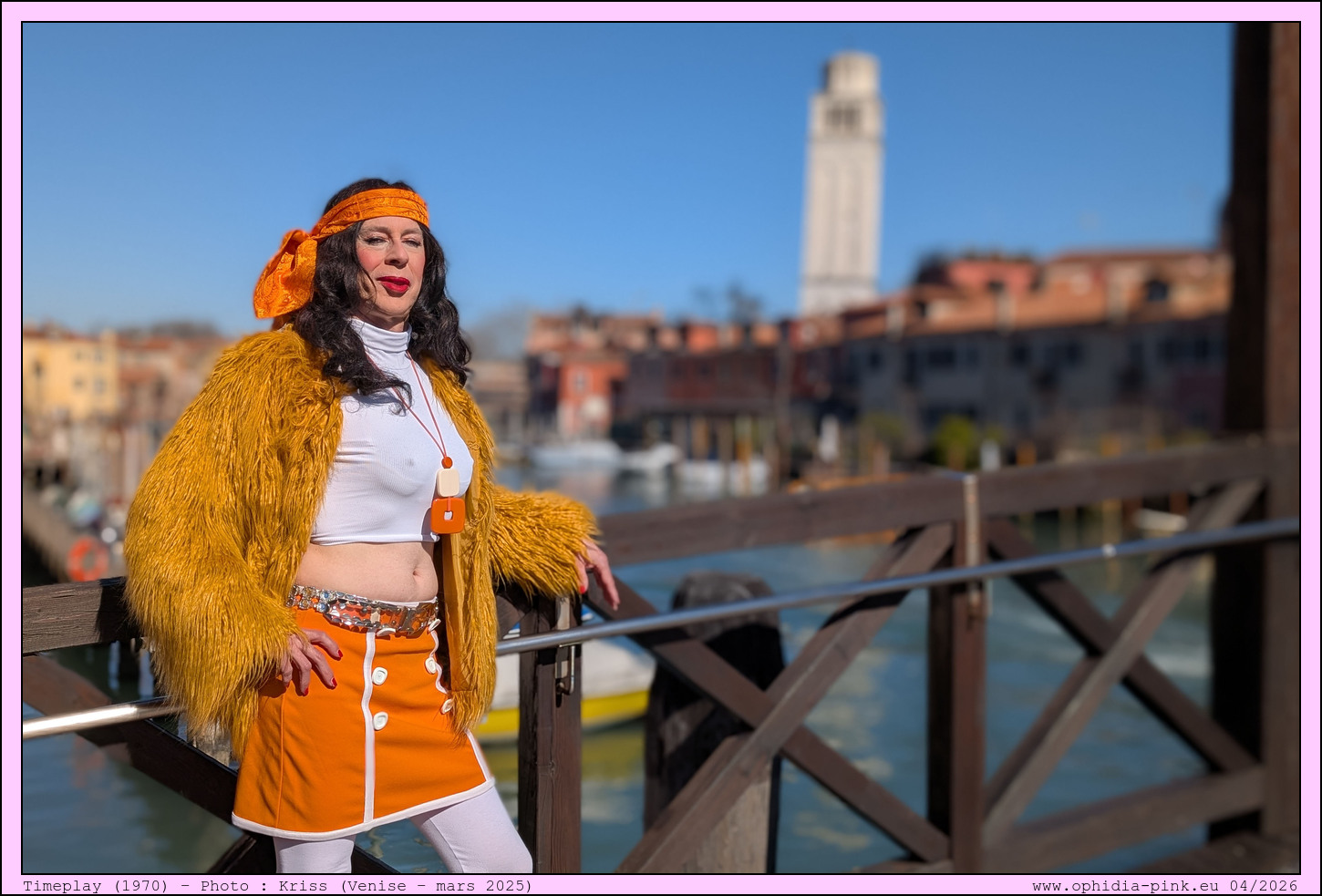
Whether made from a band of fabric to hold the hair back or an intricate circle of flowers crowning the head, headbands were a popular accessory in the hippie style of the 70s, perfect for framing the fashionable free, flowing, and natural hair.
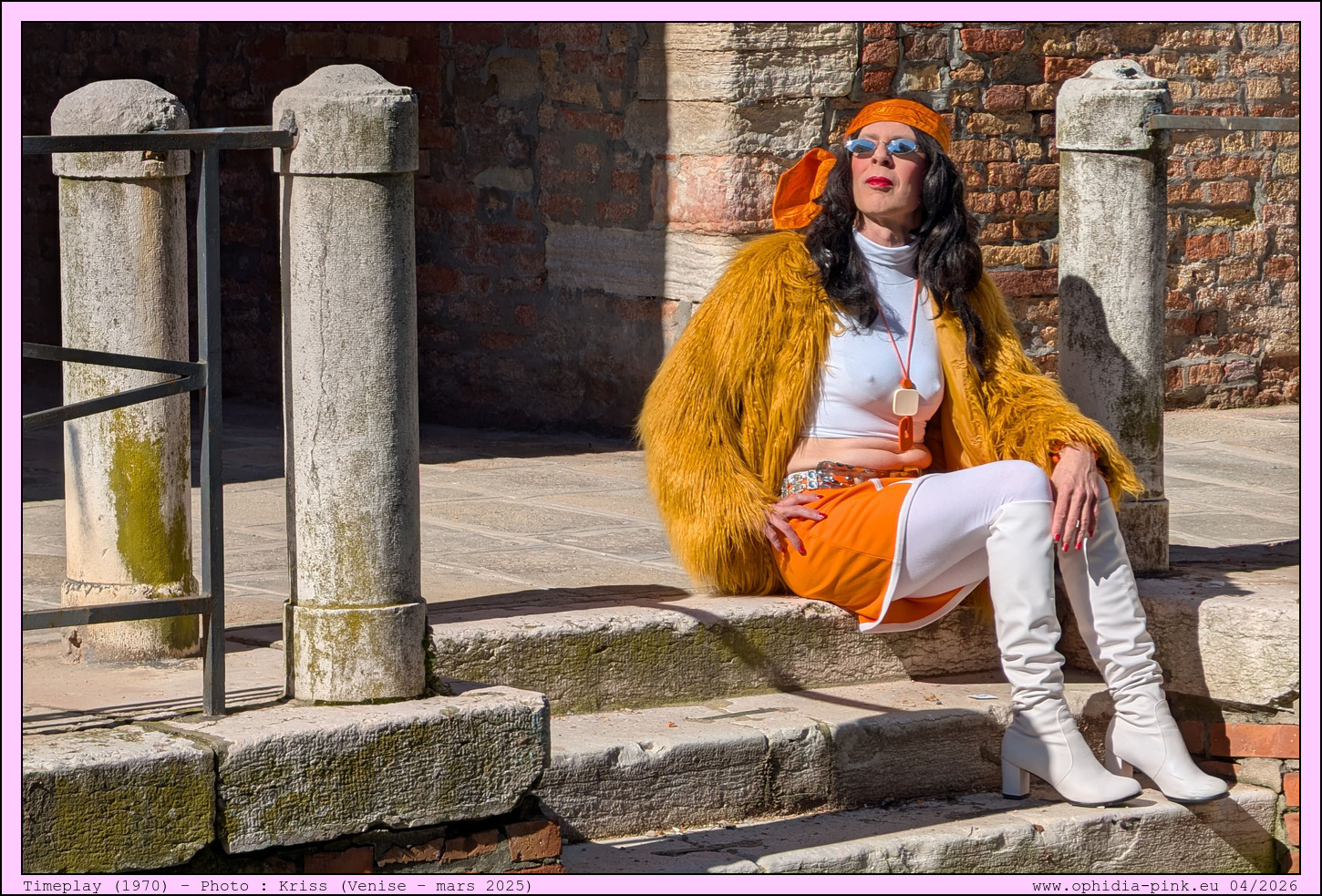
For this look, I placed myself in the very early 70s. At that time, certain new trends (here, the color orange or the 'hippie' headband) coexisted with more 60s elements like white boots. The skirt is a perfect example, quite 60s in its shape but already 70s in its color.
