The Greek salad is known locally as "horiatiki," which literally means "peasant salad" or "village salad." It is a relatively recent dish in its current form, as tomatoes only became popular in Greece during the 19th century (from the 15th to the 19th century, much of Greek territory was part of the Ottoman Empire; while trade with Western Europe existed, new agricultural crops spread there much more slowly than in major Italian or Spanish ports).
In contrast, cucumbers, onions, and olives have been consumed since antiquity, and feta has been produced for over 2,000 years (long before the word "feta" even existed).
During the 1960s and 1970s, with the growth of tourism, Greek tavernas began almost invariably serving this salad to foreign visitors. It quickly became a symbol of Greek cuisine.
In many tavernas, the feta is not cut into cubes. Instead, a thick, whole block is simply placed atop the vegetables, then drizzled with olive oil and sprinkled with oregano. Diners then break off pieces of cheese with their forks as they eat. This method is more traditional and prevents the feta from disintegrating too quickly in the tomato juices.
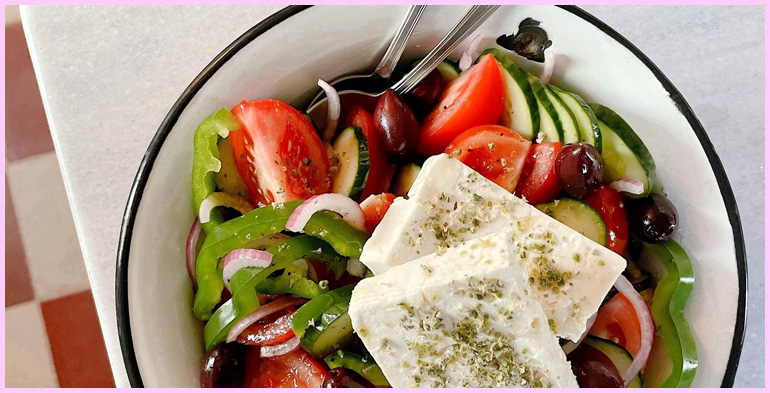
2 nice tomatoes (good tomatoes! Tasteless tomatoes make for an uninspiring salad)
1/2 red onion
1/2 green bell pepper
1/2 cucumber
100g feta cheese (Opt for sheep's milk feta or a sheep/goat blend; a good feta adds plenty of character on its own.)
Oregano
Black olives
