Calvados is a cider brandy produced primarily in Normandy, France, and its history is closely linked to apple cultivation and the agricultural traditions of this region. It is consumed neat, as a digestif, in cocktails, or used in cooking (trous normands, flambéing, sauces). It is also used for the custom of "Trou Normand": Traditionally, a small dose of Calvados between two dishes, sometimes with a scoop of apple sorbet.
In the Middle Ages, various fermented beverages were already being distilled in Europe, but apples were primarily used to make cider in Normandy. In the 16th century, the art of distillation arrived in Normandy thanks to contacts with wine-growing regions (Cognac, Armagnac) and maritime trade. The distilled cider gave rise to a brandy known as "cider brandy."
After the French Revolution, Normandy was divided into departments, including Calvados (a name derived from the "Calvador" reef mentioned on old maritime maps). It was from this time on that the cider brandy produced in this department began to be called Calvados. In the 19th century, Calvados became widely available, mainly thanks to Norman sailors and soldiers.
In the 1930s, the first production regulations were established, inspired by those used for Cognac, which led to the creation of a Calvados PDO in 1942.
A pure Calvados should be enjoyed between 18 and 20°C (room temperature) to reveal all its aromas. A young Calvados (2-4 years old) can be served slightly cooler (14-16°C) to soften the alcoholic strength.
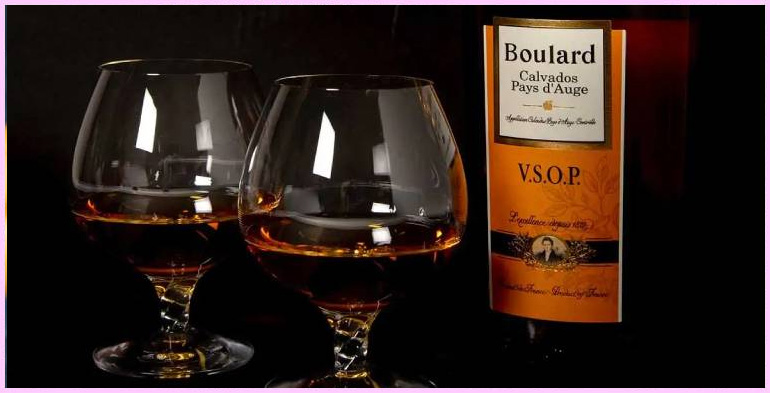
The recommended glass is a tulip glass or cognac/whisky tasting glass with a narrow neck to concentrate the aromas. Avoid straight "shooter" glasses, which don't give the nose time to express itself.
Sniff gently, without dipping your nose too close (the alcohol could dominate). Allow the notes of apple, pear, vanilla, dried fruit, and spices to emerge. Taste in small sips: let the alcohol coat the mouth and identify the flavors. Subsequent sips are often richer as the palate adjusts.
Calvados is a brandy obtained by distilling cider (and sometimes perry - Calvados Domfrontais). The apples are first crushed into pulp, which is then pressed to extract the must (juice). This juice then ferments directly.
It is left to ferment for 1 to 3 months (sometimes more than 6 months for traditional Calvados) without any added sugar or alcohol. The resulting cider generally has an alcohol content of 5 to 7%.
Single distillation in a column (column still) can be used for AOC Calvados and Domfrontais, which produces lighter, fruitier eaux-de-vie. For AOC Calvados Pays d’Auge, however, a double distillation is used, with a first heating to produce the brouillis (~28-30%), followed by a second to separate the heads, hearts (40-72%), and tails.
The resulting alcohol is left to age for at least two years in oak barrels. The alcohol mellows, takes on an amber color, and develops aromas (vanilla, hazelnut, candied apple). Producers often blend several vintages to achieve a consistent taste.
