The third most consumed spirit in the world is Rum, which represents a market of 17 billion USD (64 billion for Whisky and 26 billion for Vodka). For the sake of precision, I point out that I am not counting Baijiu, a rice alcohol whose market is 50% larger than that of Whisky but which is largely consumed only in China.
Rum is produced from sugarcane, and depending on the process, two main types of raw materials are used. These can be fresh cane juice for agricultural rum (Martinique, Guadeloupe) or molasses, a by-product of sugar production used in traditional and industrial rum (Cuba, Jamaica).
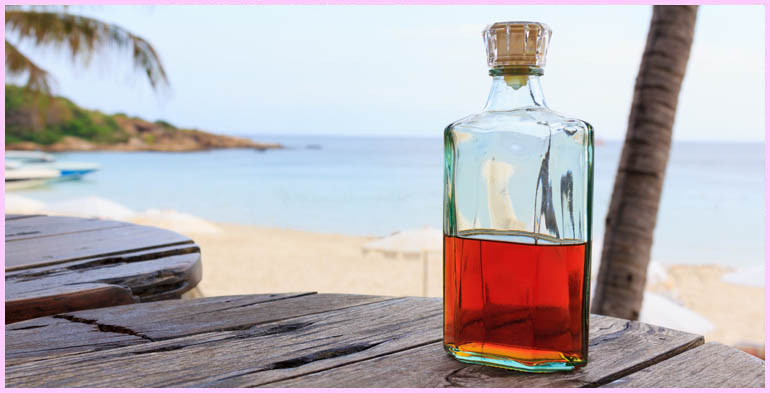
The history of rum is closely linked to that of sugarcane and colonial trade. Sugarcane has been cultivated for millennia in Southeast Asia. It was introduced to the Middle East and then to Europe by the Arabs during the medieval conquests. In 1493, Christopher Columbus introduced sugarcane to the West Indies during his second voyage. The tropical climate there was ideal: sugarcane plantations proliferated in the Spanish, French, English, and Portuguese colonies.
Around 1640-1650, slaves working on plantations discovered that a by-product of sugar production, molasses, could ferment. In Barbados and Martinique, this fermented liquid began to be distilled: rum was born. The first written record of rum comes from the island of Barbados in 1688. In France, the first descriptions of the cane distillation process, and thus of rum, were those of Father Labat, a French Dominican missionary to the Antilles, in his Nouveau voyage aux îles de l'Amérique (1722).
This primitive rum was brutal and used in particular for sailors (ration in the British navy), barter in the triangular trade and for local consumption before being marketed in Europe. Some etymologists trace the name "Rhum" back to the word "Rumbullion" which meant altercation or fight and it is certain that this alcohol, very violent at the time, must not have softened the morals of those who abused it.
Rum was once the most consumed alcohol in the West, but in the 19th century the end of slavery disrupted the plantation economy, whiskey gained popularity, particularly in the United States, and European sugar beet competed with sugar cane. It was at this time that the appellations of Rhum Agricole and aged rums aged in barrels (inspired by whiskey and cognac) appeared. Rum became a more noble drink and no longer just for "pirates."
Over time, three similar but different products will be defined: Rhum, Ron and Rum.
- Rhum Agricole is the French version of the product. It comes from the French-speaking regions (French Antilles, Réunion, Haiti, etc.). Its characteristic is that it is made from cane juice and not molasses. More often distilled in a Creole column than in a still, it is drier, herbaceous, and aromatic.
- Ron comes from Spanish-speaking countries (Cuba, Dominican Republic, Venezuela, Panama, etc.). Produced from molasses, it is heavily filtered and often sweetened, and has a lighter, sweeter, and rounder style.
- Rum comes from English-speaking countries (Bermuda, Barbados, Trinidad, Guyana, etc.). Often produced from molasses like Hispanic Ron, it is however distilled in a traditional pot still, which gives it more power and a spicy and fruity taste that is sometimes more "complex". Rum has a dark color (English white rums are very rare and are generally aged rums from which the color has been removed with charcoal filtration), a nice roundness in the mouth and a strong aromatic concentration. Jamaica is an exception to what is written just above because it produces white rums which constitute a category in their own right. These ultra-aromatic (but not flavored) rums are the result of long fermentations and are capable of enhancing any type of cocktail thanks to their fruity notes. Among them is the Overproof category, rums with a very high alcohol content.
Fermentation (from 1 to several days) transforms the sugars (from the juice or molasses) into alcohol through the action of yeasts, giving a low-alcohol liquid (5-10%), called "cane wine" or "mash". This wine is then distilled to concentrate the alcohol, giving a transparent liquid called white rum with a high alcohol content (60-75% vol.).
Rum can be bottled directly or aged in oak barrels to develop complex aromas. White rum is unaged, amber rum is aged between a few months and 2 years, and dark rum or old rum (VSOP, XO, etc.) is aged for a minimum of 3 years, sometimes more than 15 years. Before bottling, rum is often reduced with water to reach a commercial alcohol content (often around 40-50% vol.)
White rum is an excellent base for cocktails.
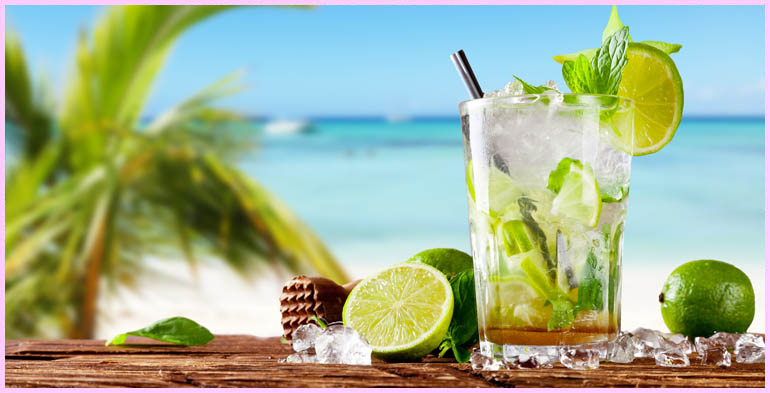
1 - Flavored rums come in many flavors and often have lower alcohol content and higher sugar levels. The flavors are usually artificial.
2 - Arranged rum is a rum preparation in which various ingredients such as leaves, fruits, seeds, bark, or sweets have been macerated. It is an iconic drink in Reunion Island, but also common in the Antilles and Madagascar.
Cachaça is a very particular type of agricultural rum typical of Brazil, made from sugar cane juice obtained by crushing. French agricultural rum is a refined product that undergoes many transformations, while cachaça, more rustic, is the result of a less strong distillation (it is distilled between 38° and 48° while French agricultural rum is 65-75° at the exit of the still before being brought to the desired degrees by adding spring water). Cachaça is characterized by its smoothness, patinated with wax, and a toasted aroma. It is very little exported and is the main base of the famous Brazilian cocktail "Caipirinha".
Don Papa Masskara comes from the Philippines. It's a rum infused like a gin. The ingredients are 100% Filipino: Calamansi, a type of lime, the small Siling Labuyo chili, and honey from Mount Kanlaon, the highest peak on the island of Negros. The notes of this rum are simultaneously spicy, fruity, and lemony. Its name pays homage to a masked festival, Masskara, which takes place every October on this island located in the south of the archipelago.
Santisima Trinitad rum is made in Cuba and deliciously recreates all the warmth that envelops its terroir of origin! It has benefited from a 15-year aging process carried out in three stages. The eaux-de-vie used are first left in barrels for at least 4 years. This provides the basis for the final blend. Once blended, they mature again for 7 years. A new blend is then worked on, followed by a final finishing touch of 4 additional years! The result is a delicious aged rum, with notes of coconut, vanilla, chocolate and caramel, with an alcohol content of 40.7%!
The latest discovery is Demon's Share, a flavorful rum from Panama, fermented with an indigenous yeast and aged for six years in American oak barrels. Particularly aromatic, the tasting is marked by citrus notes.
For cocktails, I always stick to French agricultural rum. The Trois Rivières Plantation has over 350 years of history... In 1660, Nicolas Fouquet, Louis XIV's Superintendent of Finance, was awarded the largest concession ever granted in the Antilles: 2,000 hectares located south of the island of Martinique. Be careful, there are two strengths for this bottle, and you should use the 50%. It makes an excellent base for cocktails.

