The second most consumed spirit in the world is vodka, which represents a market of 26 billion USD (64 billion for Whiskey). For the sake of precision, I point out that I am not counting Baijiu, a rice alcohol whose market is 50% larger than that of Whiskey, but which is mostly consumed only in China. Vodka is produced by processing cereals (rye, wheat) and/or potatoes, but other agricultural products can be used, such as beets (molasses) or fruits (apples, plums). The best taste is achieved with winter wheat and rye (as in bread). Between four and five thousand brands of vodka are present on the market!
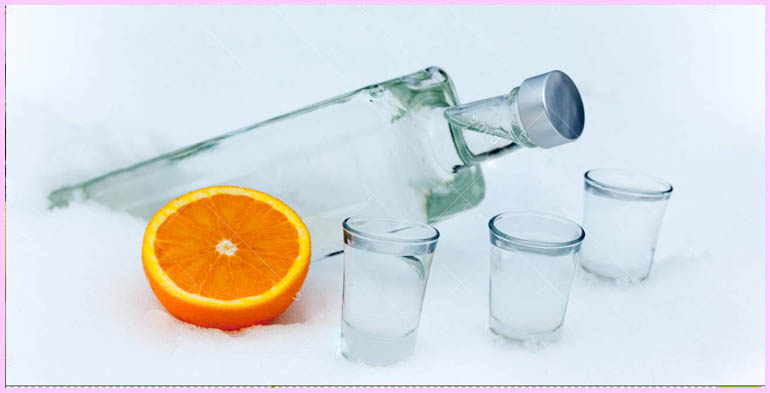
The history of vodka is long, complex, and disputed between several Eastern European countries, notably Russia and Poland, each of which claims the origin of this drink. The first written mentions date back to the 14th century. The Frenchified term "vodka" can be literally translated as "little water." In Slavic languages, the word for "water" is "voda," the ka having a hypocoristic value [to indicate tender affection]. The term first appears in a manuscript from Sandomir (Poland) in 1405 but remained little used for a long time. In Russia, this alcoholic beverage was often made with the same cereals as bread and was therefore called хлебное вино "Bread wine" (At the time, the word Vodka rather referred to its medicinal use to disinfect wounds, relieve toothache, or treat fatigue).
As distillation improved, vodka became a popular beverage. It was first distilled from grains such as rye and wheat, and later from potatoes. Under Peter the Great, vodka became a central element of Russian culture as the state gradually monopolized its production and sale, generating significant tax revenue.
After the Russian Revolution (1917), many distillers fled the country (including those behind Smirnoff), helping to introduce vodka to Western Europe and the United States. But it was in the 1950s and 1960s that vodka really became popular in the West, thanks to advertising campaigns and its use in cocktails (it was considered a "neutral" spirit, which made it very popular in mixology).
Until almost the end of the 19th century, vodka was made using the same method as other distilled beverages, and the quality of the vodka was rather poor. Seasonings were often added to reduce unpleasant odors and the burning sensation. Modern vodka appeared in the 1880s and 1890s in what is now Russia and Poland, when the use of rectification equipment became widespread, allowing for the achievement of a very high level of ethyl alcohol purity.
The goal of modern vodka distillation is to produce a clear, highly pure spirit, as close to ethanol as possible, while retaining the positive characteristics of the ingredient from which it is derived. Since the standard column still cannot achieve the required degree of rectification, most distillers use multiple rectification columns to achieve an alcohol level of 96% (Triple distillation, carbon filtering). The spirit is then blended with water (spring water low in mineral salts ideally) to return to the desired alcohol level, often 40%. Water from icebergs in the Arctic Circle is particularly popular due to its high purity.
Why 40°? There's a historical reason: at 40%, the water-ethanol mixture can ignite at room temperature, the English "proof" (a customer who suspects a diluted product can easily check). But it's also the taste optimum. The water-ethanol mixture reaches its maximum viscosity at 40%, and unlike a complex alcohol that is sipped like whiskey or cognac, it's not the flavor in the mouth that matters most, but the aftertaste, and the more viscous the mixture, the more it sticks to the palate and taste buds.
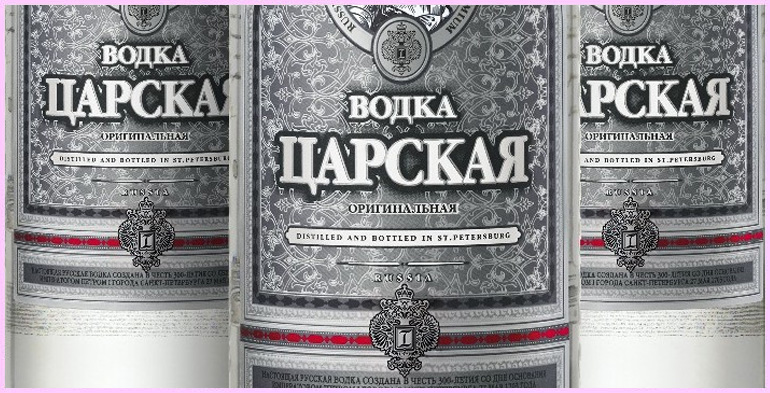
The many distillations make vodka a white spirit with a mild flavor. White vodka comes in three types (standard vodka, premium vodka, and extra-premium vodka) depending on the quality of the ingredients used and the complexity of the manufacturing process, which ensures product purity. Unflavored vodka is preferable for cocktails and certain tastings, including caviar.
The mild taste of white vodka can bother some people. It is also noted that the rare blind tasting studies reveal the inability of a large majority of participants to meaningfully distinguish between different vodkas of equivalent quality simply by their taste. Vodka is therefore frequently flavored. Polish or Belarusian Żubrówka, for example, uses bison grass, which gives it a light coloring and a characteristic aroma. This grass is harvested during a short period in the summer (the hottest possible) and then used in the distillation of grain brandy. There are several other traditional flavors: chili pepper (often with honey, especially in Ukraine), birch, cranberries, rowan berries, cedar nuts, nettles, pepper.
More natural than flavored vodka, infused vodka can be made at home by infusing a flavoring into a bottle of white vodka.
1- We often hear that vodka should be kept in the freezer in order to be served very cold. It turns out that this misconception comes from the fact that in Eastern countries vodka is often stored this way BUT it is because it is mediocre vodka and the extreme cold reduces its taste defects. It is frankly better to keep a good vodka in the fridge and not in the freezer. In Russia we enjoy enjoying a good 5° vodka with a pickle or smoked or salted fish toast.
2 - Vodka doesn't have to be potato spirit! In fact, while vodka can be made from potatoes, rye traditionally forms the basis of this spirit. Originally, the taste of vodka was intended to be as neutral as possible. Rye is popular because it produces particularly smooth spirits. On the other hand, potato-based vodka, very common in Belarus, has a much more pronounced note. Barley and wheat are also frequently used.
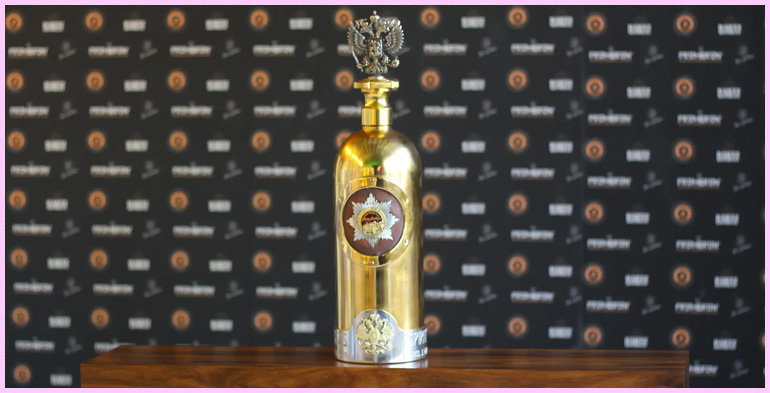
In January 2018, a spectacular robbery took place in Copenhagen. The world's most expensive bottle of vodka, a Russo-Baltique valued at $1.3 million, was stolen from the Café 33 bar. It had been loaned to the bar's owner, Brian Ingberg, by a Russian businessman and was uninsured. For those who have seen the series "House of Cards," it's the bottle with the imperial eagle given by the Russian president to the American president.
The price of the bottle is not due to the vodka inside, but rather to the fact that the bottle itself is made of three kilos of gold and three kilos of silver, and its cap is adorned with a diamond-encrusted replica of the Russian imperial eagle.
Imagine everyone's surprise when the bottle was found, intact but empty, in a construction site near the bar. It hadn't been stolen for the gold, silver, or diamonds; it had been stolen because it contained vodka to drink!
I usually have two bottles of Zubrowka, a classic one (with the buffalo grass in it) for drinking straight and a Biala (without the grass, more neutral tasting) for cocktails.
Other bottles I have at my house: Soplica. This is a 20% vodka liqueur flavored with fruits, nuts, or hazelnuts. I particularly like the raspberry and hazelnut ones.
