The most widely consumed spirit in the world is whisky. It is the generic name for a group of spirits made by distilling malted (germinated) or unmalted (still grain) cereals. The term is a simplification of the original Gaelic name 'Uisge beatha', which means Water of Life. (For the sake of precision, I would like to point out that I am not counting Baijiu, a rice alcohol whose market is 50% larger than that of Whisky, but which is largely consumed only in China).
The first written record of whisky in Scotland dates back to 1494. It is a note referring to the production of brandy in an official document (‘Exchequer's roll’) which specifies “8 bolls of malt to Friar John Cor, by order of the King to make aqua vitae” testifying to a practice already well established. It is generally considered that the monks of Dal Riada shared their knowledge of distillation with the Scots when they came to evangelize the Picts of Caledonia (the old name for Scotland). Like other spirits, the ancestor of whisky is considered at this time only for an essentially medicinal use, used as an ointment as well as a medicine.
In the 16th century, the development of water cooling systems led to a significant improvement in quality, accelerating the economic development of Scotch whisky. The dissolution of the English and then Scottish monasteries led monks to blend into the secular population and share their expertise. While the resale of brandy in Scotland had been legal only for barbers and surgeons since 1505, it had also become a common activity on the farm, where any surplus grain was distilled. At this time, whisky was still a colorless brandy because it was unaged.
The British imported oak-barreled wines to Scotland, notably sherry, the most renowned wine from Andalusia (Cadiz and Seville) in Europe at the time. They decided to use these barrels to transport whisky back and forth and discovered that this method of transport reduced oxidation, developed the whiskey's bouquet, and gave it a different color depending on the type of barrel. They therefore favored aging in oak barrels.
Whisky must be aged for at least three years (if it is aged in oak barrels for less than three years, it is illegal to call it whisky). There are five stages in its production:
Scotland - Speyside County: This is the region that encompasses the valley of the River Spey in the northeast of Scotland. It currently has the largest number of distilleries in Scotland. Most distilleries draw the water needed for their production from the tributaries of the Spey: the Fiddish, the Livet, and the Avon. The Speyside region has become the leading producer of Scottish single malt. Some whiskies produced in this region are among the most famous in the world, such as Glenfiddich, Glenlivet, Macallan, and Cardhu, but Speyside is also full of hidden gems like Benriach, Benromach, Glenfarclas, and Glendronach. The region's single malts are among the lightest and smoothest whiskies in Scotland. Age often gives them a little more body, and the frequent use of sherry casks in the region gives them superb power, roundness, and fruity notes.
Scotland - Islay Island : This island, located southwest of the Scottish coast, is home to a single malt that is recognizable among many others just by its smell. It is swept by sea spray and a quarter of its surface area is covered in peat bogs. Distilleries have adapted to these different geological and climatic characteristics and have used peat to dry the malt, resulting in whiskies with a strong smoky taste. The saline character is also found in Islay Single Malts, particularly those produced in the distilleries located in the south of the island: Ardbeg, Lagavulin and Laphroaig. As for Caol Ila and Bowmore whiskies, they are less peaty but have a strong character. Two other distilleries stand out, Bunnahabhain and Bruichladdich, which produce fine, elegant and lightly peated whiskies, with the exception of Port Charlotte and Octomore, a very peated single malt produced by Bruichladdich since 2001. Finally, Kilchoman, founded in 2005, is an authentic distillery which delivers a peated malt with maritime notes.
Scotland - Highlands : It is difficult to characterize the whiskies of the 'Highlands' as the region is so vast (2/3 of Scotland, the lower third being the 'Lowlands'). The best-known Single Malt of the Highlands is Glenmorangie, a distillery located near Inverness. The North of the 'Highlands', above Inverness, offers distilleries with a salty and marine character due to the coastal location of the distilleries (Clynelish, Old Pulteney, Wolfburn...). This iodized character is however less marked than on Islay. The eastern part, Eastern Highlands, offers fairly dry Single Malts (Glencadam, Old Fettercairn...). Finally, the whiskies of the West Highlands are generally full-bodied, spicy and smoky, Oban being the capital.
Scotland - Lowlands : The region covers the southern third of Scotland, the territory south of the imaginary line connecting Dumbarton to Dundee. There are a very small number of distilleries still operating in this area, the most famous being Glenkinchie and Auchentoshan, located southeast of Edinburgh and north of Glasgow respectively. The region's single malts are generally dry and light with floral and vegetal aromas.
Irland : It's customary to add an "e" to the word whisky when it's Irish. Legend attributes the introduction of distillation to Ireland to Saint Patrick, who brought the first still with him. The first distillers were therefore monks. Irish whiskey is distinguished by its triple distillation. A rather rare phenomenon (few spirits are produced using this method), this method enhances the taste of the whiskey while eliminating its impurities. This makes it deliciously smooth, without being bland!
USA : f the Whiskey is produced on American soil, we speak of 'American Whiskey' which includes two very specific families, BOURBON (corn-based) and RYE (rye-based).
Bourbon is made from at least 51% corn, with the remainder usually being rye or wheat. It is aged in new, charred oak barrels (aging is optional for the "bourbon" designation, but a minimum of two years of aging is required for the "straight bourbon" designation). Bourbon County, in the U.S. state of Kentucky, produces this whiskey and gives it its name, which originates from a tribute to King Louis XVI of France, the fifth king of the House of Bourbon and a decisive ally of the American colonists against the English in their fight for independence. Generally speaking, Bourbon differs from Scotch whisky in that it has a smoother yet fuller taste. The difference comes largely from aging in always new barrels, which transfer the wood aromas to the bourbon fairly quickly. Used bourbon barrels are often found in Scotland, used to age Scotch, or in the Caribbean, for maturing aged rum. Jack Daniel's produces a variant of bourbon called Tennessee whiskey. For image and geographical reasons, it doesn't refer to bourbon, but it does share its characteristics.
Rye whiskey (with an "e") is, by law, made with a minimum of 51% rye (the other ingredients in the mash being mainly corn and barley) and then aged in freshly charred oak barrels. Rye whiskey originated with the early German and Dutch settlers of New England and Canada, who began using rye to distill whiskey in the late 18th century. It became the main whiskey produced in the northeastern regions of the United States, mainly in Pennsylvania. Often compared or associated with American bourbons, Rye whiskey nevertheless offers very different characteristics that distinguish it in taste from other appellations in the whiskey world. Be careful with rye whiskey, the lack of regulations in Canada means that some products with little or no rye carry this name in Canada. If the rye ages in barrels for more than two years, and it respects the 51% With a minimum of rye, it can benefit from the designation of straight rye whiskey. Its spicy and fruity aromas give it a unique taste.
Japan : Hailed as the "best whisky in the world" by some critics, Japanese whisky has been making waves in Europe for a little over ten years, following the gold medal received by Yamazaki in 2003. While at the beginning, for the pioneers of Yamazaki, whose distillery was founded in 1923, the aim was to get as close as possible to Scottish whiskies, Japanese whisky has managed to find its own unique style over the years. At the origin of this Japanese "success story" is Masataka Taktsuru, considered the pioneer of Japanese whisky. The son of a sake producer, he went to Scotland to learn the art of distillation and blending in 1918. Masataka returned to Japan in 1920, accompanied by his partner Rita, whom he met in Scotland. In 1921, he left Settsu Shuzo, the distillery that had sent him on a mission to Scotland, and joined forces with Shinjiro Torii, often considered the "other" founding father of Japanese whisky. The two friends thus aimed to develop a whisky suited to the palates of their compatriots. It was in Shimamoto that they found the ideal location to build the YAMAZAKI distillery in 1923. A decade later, Taketsuru decided to break away from his partner and founded the Yoichi distillery and his own brand, NIKKA, in 1934.
Clynelish 14 Year Old is a single malt aged in bourbon casks. This balanced whisky is a perfect example of whiskies distilled in the north of Scotland.
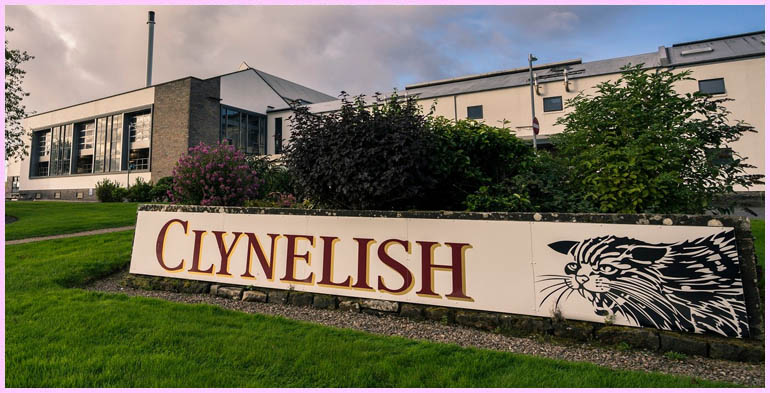
Clynelish Distillery is located on the east coast of the Highlands, halfway between Inverness and the far north of Scotland. The distillery opened in 1968 as a modern replacement for the old Brora Distillery located nearby.
Upon tasting, the opening immediately projects you into a fresh and creamy nose, bringing malty aromas and a marine freshness. It then becomes fruitier, with lemon and spice. There is also a beautiful floral presence with a touch of violet and lavender. An extremely interesting introduction.
On the palate, the nose is confirmed, with a presence of sea spray and fruit, more orange this time. Spices are also present with ginger. Smoky notes gradually appear while rounder aromas like vanilla and toasted wood round off a very rich palate. A magnificent example of perfectly balanced complexity.
La finale est relativement longue et assez sèche, sur de la fumée et des notes salées.
Glenmorangie Nectar d'Or is a single malt finished in Sauternes casks.
The Glenmorangie Distillery is located near Inverness on the east coast of the Highlands. Glenmorangie means "dale of the great meadows" in Scottish Gaelic. Officially, alcohol production began at the distillery site in 1738, when a brewery was built on Morangie Farm.
The nose reveals the hallmarks of Sauternes, with sweet fruits like dried apricots, pineapple, and bananas. Vanilla and honey notes intertwine with them. The distillate then returns with floral notes and spices, sweet at first with cinnamon, then more acidic with a hint of turmeric.
On the palate, the distillate reasserts itself with fresh citrus fruits, lemons, and oranges. The honeyed notes are more subtle. A touch of woodiness, followed by a slight bitterness with notes of roasted coffee. The palate finishes with notes of gingerbread and toffee.
The long, flavorful finish is characterized by tangy fruits and honey. It concludes with notes of malted barley.
The Ardbeg 10 Year Old, often considered a peat monster, is in fact a very fine whisky with fruity and spicy sides.
Ardbeg Distillery is located on the Isle of Islay. It is one of three operating distilleries on the south coast of Islay, along with Lagavulin and Laphroaig. It was founded in 1815.
This whisky offers a beautiful balance as soon as its aromas reach your nostrils. Although peat is the first to reveal itself, a subtle chocolate will soften it. Almonds are also present. It then evolves into candied fruits, grapefruit and lemon, accompanied by pineapple before becoming more earthy with gentian and roots. Gradually, it becomes increasingly smoky.
On the palate, its attack is peppery before smoke and ash return to dominate. Gently moving towards licorice, the mid-palate is quite earthy. Lemons and fresh fruits, apples and pears, as well as a floral note, will close this succulent mouth.
The finish will be quite long and very ashy. Notes of grass and fresh mint, for the herbaceous side, and gentian and ginger roots will remind us of its earthy side. A few white fruits will come at times to give a sweeter note.
The Glenlivet 18 Year Old is produced in one of Scotland's oldest legal distilleries. Its single malt, the best-selling in the USA, is fresh, floral, and, above all, very smooth on the palate.
The Glenlivet Distillery is located in the heart of Speyside. It was founded in 1824.
On the nose, you immediately sense its freshness. Baked apples begin with a sweet note of honey, before descending into a field of spring flowers. Notes of peonies, lilac, and cedar then give way to notes of nuts and some spices, which are more noticeable on the palate.
On the palate, we once again find spices, flowers, and sweeter notes. It starts with subtle notes of caramel and honey, accompanied by a hint of cinnamon. Then it shifts completely to fruit, with apple again, but also oranges. A sweet note concludes, like maple syrup.
The finish is medium-long, with oranges and spices, still some flowers and a hint of woody notes.
Kilchoman Machir Bay comes from Scotland's smallest distillery. Built on the farm-distillery model, it produces a large portion of its own barley, allowing it to produce a 100% Islay version of its whisky.
The Kilchoman distillery is located in the heart of the island of Islay. It was recently founded in 2005.
The nose immediately captures its maritime spirit. Notes of salt and sea spray open the freshness that awaits us. Fresh fruit softens this sea voyage with notes of stewed apples, adding a gentle acidity. Finally, peat arrives with camphor aromas that bring a punchy edge that perfectly complements the youthful spirit of this Kilchoman.
On the palate, the attack is fruity, somewhere between classic and exotic. Grilled pineapples are prominent, quickly softened by beautiful fresh apples. The fruitiness of this Machir Bay is then very well complemented by notes from the bourbon barrel, with a beautiful honeyed vanilla and a slight salty edge. Between the smoky fruits from the peat notes and this sweetness, we may have the pairing of the year.
The finish is medium-length, with that animal note typical of the Kilchoman finish. A cold tobacco in osmosis with a beautiful note of licorice brought by the peat. A few timid traces of vanilla from the cask soften this final act.
Founded in 1891, the distillery, located in the village of Craigellachie in the heart of Speyside, Scotland, is distinguished by its unique cooling system using coiled condensers, also known as "worm tubs," and the exclusive use of malted barley from a specific kiln in Glenesk. These features give its whiskies a distinctive aromatic intensity.
Its nose is characterized by aromas of baked apples, cinnamon and caramel shortbread.
On the palate, the aroma becomes more complex with notes of pineapple and wood fire.
The finish is powerful and persistent.
Founded in 1934 by Masataka Taketsuru, considered the father of Japanese whisky, Nikka Whisky produces a wide and diverse range of whiskies at its two distilleries located in northern Japan: Yoichi and Miyagikyo.
Nikka Coffey Grain is a grain whisky made primarily from corn and distilled in coffey-style stills at the Miyagikyo distillery. Exotic, fruity, and highly distinctive, it's ideal for whisky lovers looking for a unique experience.
On the nose, it reveals sweet notes of ripe pear, cherry juice, and exotic fruits. Citrus fruits, blood oranges, and lemon, emerge, giving way to subtle floral notes of apple and cherry blossom.
Juicy and delicious on the palate, it lives up to the promise of the nose. A farandole of ripe fruits accentuated by frank notes of rum (banana) and caramel.
The finish is just as delicious as the palate, developing notes of pear and bourbon vanilla before fading into a very lovely, light bitterness.
