From the 16th century onward, sugar consumption exploded in Europe, largely due to the emergence of those curious exotic drinks: tea, coffee, and chocolate. Sugar moved from apothecaries' offices to grocers' shops.
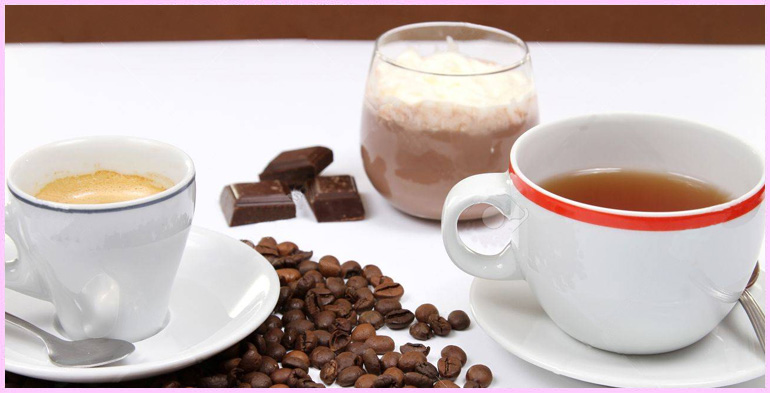
Chocolate, in its original form, is a frothy, thick, and bitter drink created by the Aztecs. The Spanish who discovered it removed the chili pepper and substituted sugar. They quickly adopted it, and by the end of the 16th century, no one at the Spanish court could do without it.
In France, it seems that it was Richelieu's brother who first used it to "moderate the vapors of his spleen." But its success was mainly due to Maria Theresa of Austria (1638-1683), the Spanish wife of Louis XIV, who spread it among the aristocracy. In 1671, Madame de Sévigné wrote to her daughter: "You are not well, chocolate will make you better." In 1684, a doctor concluded that "well-made chocolate is such a noble invention that it should be the food of the Gods, rather than nectar and ambrosia."
While the Portuguese were the first to taste tea and bring it back to Europe in 1610, it was the English who quickly adopted it and made it their national drink. Faster ships (clippers) were specially designed so that the precious cargoes would not be damaged during the voyage. Even peasants drank it, as François de La Rochefoucauld testified in 1784: "It is taken twice a day... The sugar or brown sugar, which is necessary in large quantities and is very expensive, does not prevent this use from being widespread without exception."
In France, tea appeared around 1640, but its success remained limited. Deemed dangerous by doctors, it was especially rare and expensive. It was not until the Anglomania of the late 18th century that it was accepted, albeit modestly.
Originating in Ethiopia and Yemen, coffee spread throughout the Muslim world beginning in the 15th century. European travelers began to talk about it. It began its European journey in Venice in 1570, reaching Holland, Germany, and England, where high society adopted it before succumbing to the charms of tea. In 1644, Marseille traders brought some back, but coffee was seen only as a traveler's oddity. It was considered a medicine, even an aphrodisiac, but its black color, considered hellish, was off-putting.
An "extraordinary" circumstance would somewhat alter the image of coffee in France: the stay in Paris in 1669 of an ambassador from the Sultan of the Ottoman Empire, Mehmed IV. Suleiman Aga was in the habit of offering coffee. The attraction to the Orient and the exoticism in vogue at the court of the Sun King would then benefit the café.
Very quickly, Armenian-owned "coffee shops" opened in Paris, but they did not prosper. It was then thought of to bring coffee to homes, as was done for tea in London. Without much success. It was not until 1686, when the Sicilian Procope took over a café (in Paris), that the ancestor of the Parisian and French café appeared.
In France, it seems that it was Richelieu's brother who first used it to "moderate the vapors of his spleen." But its success was mainly due to Maria Theresa of Austria (1638-1683), the Spanish wife of Louis XIV, who spread it among the aristocracy. In 1671, Madame de Sévigné wrote to her daughter: "You are not well, chocolate will make you better." In 1684, a doctor concluded that "well-made chocolate is such a noble invention that it should be the food of the Gods, rather than nectar and ambrosia."
You will find in the three dedicated pages numerous recipes and information on these three drinks.
