The term coffee comes from the Arabic 'K'hawah' (invigorating). It is an energizing drink, obtained from the roasted seeds of the coffee shrub. Coffee cultivation is widespread in many tropical countries in America, Africa, and Asia.

Genetic studies on the 'Coffea arabica' coffee plant suggest that it likely originated in Ethiopia, in the province of Kaffa, where the ancestors of the Oromos consumed coffee in various forms (both as a beverage and as food). It has been known there since prehistoric times. Peasants in southwestern Ethiopia likely roasted coffee beans over embers and ground them into a porridge in which coffee originally served as a spice with medicinal properties, much like cocoa among the Aztecs.
Coffee spread in the 12th or 13th century from Yemen, where its popularity likely benefited from the Islamic prohibition of alcohol. It was then called K'hawah, meaning "invigorating," in Sufi monasteries, where the first attested traces of coffee consumption as a beverage and knowledge of the coffee plant are found. The main Yemeni coffee port was called Mocha. Coffee spread quickly throughout the Muslim world.
There are records of numerous "coffee houses" from Cairo to Istanbul, including Mecca, at the beginning of the 16th century. These were inexpensive places of conviviality where chess and backgammon were played, and poetry recited. Emir Khair Bey Mimar, governor of Mecca, convened an assembly of jurists and physicians to decide whether the drink was in accordance with the Quran, which prohibits all forms of intoxication. After an opponent of coffee declared it as "intoxicating" as wine, the assembly of interpreters of the Holy Scriptures very prudently judged that he must have drunk wine to know this and should therefore be beaten, and that for the rest, they left it to the physicians. When they recognized the toxicity of coffee, the governor forbade its consumption under penalty of severe punishment. But the Sultan of Cairo, having learned of the ban, was upset and declared that, according to his doctors and scholars, coffee was entirely good for health and pleasing to Allah. During the century, on several occasions, such as in 1525 and 1534, controversies over the diabolical nature of coffee resurfaced and persecutions against coffee drinkers resumed.
Coffee arrived in Europe around 1600, introduced by Venetian merchants. By 1615, it was regularly consumed in Venice (where a specialized place to enjoy it, the Caffè Florian, founded in 1720, was opened, making it the oldest in Italy still in operation). Pope Clement VIII was advised to ban coffee because it represented a threat from infidels. After tasting it, the pontiff adopted it, declaring that leaving the pleasure of this drink only to infidels would be a shame. Coffee quickly became popular with monks for the same reasons it was with imams: it allowed them to stay awake for a long time and keep their minds clear.
Around the 1650s, coffee began to be imported and consumed in England, and coffeehouses opened in Oxford and London. Coffeehouses became places where liberal ideas were born, as they were frequented by philosophers and scholars. Pamphlets and pamphlets were distributed in coffeehouses. In 1676, this unrest prompted the King's Attorney in England to order the closure of coffeehouses, citing crimes of lèse-majesté against King Charles II and the kingdom. The reactions were such that the closure edict had to be revoked. The flow of ideas fueled by coffeehouses would profoundly change the United Kingdom. There were over 2,000 coffeehouses in the United Kingdom by 1700. The famous insurance company Lloyd's of London originated as a coffeehouse founded in 1688: Lloyd's Coffee House.
Arabica and Robusta are two botanical species native to Africa that are the most widely cultivated in the world for coffee production. However, there is a very wide diversity of coffee plants, as the genus 'Coffea' has nearly 80 species and several hundred different varieties. The first thing to note is that Arabica coffee is generally quite mild and more or less fruity and tangy, while Robusta coffee is strong and bitter.
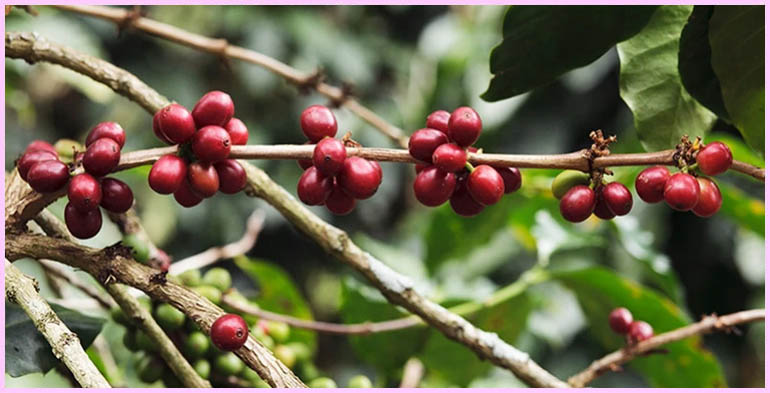
It's a shrub native to Africa, where it grows wild from Uganda to Guinea. Robusta has a less developed aroma and a more bitter and full-bodied taste than Arabica. Due to its earthy flavor and strength, it was long overlooked by coffee producers, but it is now widely used to enrich the flavor of Arabica coffees through skillful blends. It's also worth noting that Robusta coffee contains twice as much caffeine as Arabica coffee (an average of 3%). Robusta is the basis of Italian coffee beans due to its color and characteristic foam. It's worth noting that espresso is originally made from 100% Robusta.
The plant requires less maintenance than Coffea arabica and is therefore less expensive to produce. Robusta now accounts for 35% of global production, compared to 25% in the 1980s. The main producers today are Vietnam (18 million bags in 2008), Brazil (11 million bags) and, to a lesser extent, Indonesia (6 million bags), with these three countries together accounting for 75% of global robusta production.
It is a shrub native to East Africa: Ethiopia, South Sudan (Boma Plateau), Kenya, and Yemen. The only coffee species cultivated until 1865, it is widespread in tropical regions, particularly in Central America (Costa Rica, Honduras) and South America (Brazil). Brazil (30 million bags in 2008) and Colombia (12 million bags) are the two main producers of Arabica in the world and together account for 55% of global production. 11 85% of Arabica coffee is produced on the American continent.
Arabica is distinguished by its great finesse, its more developed aromas than those of Robusta, and its low caffeine content.
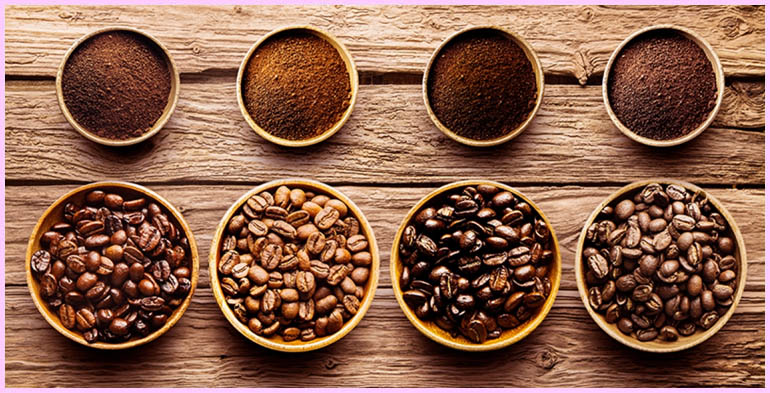
Terroir influences the flavors perceived during tasting. Although the image of coffee plantations is often associated with that of immense estates such as those found in various countries, such as Brazil, approximately 70% of global coffee production comes from mainly family-run farms with an area of less than 10 hectares, most often less than five hectares.
There are many ways to prepare the drink, each resulting in very different concentrations:
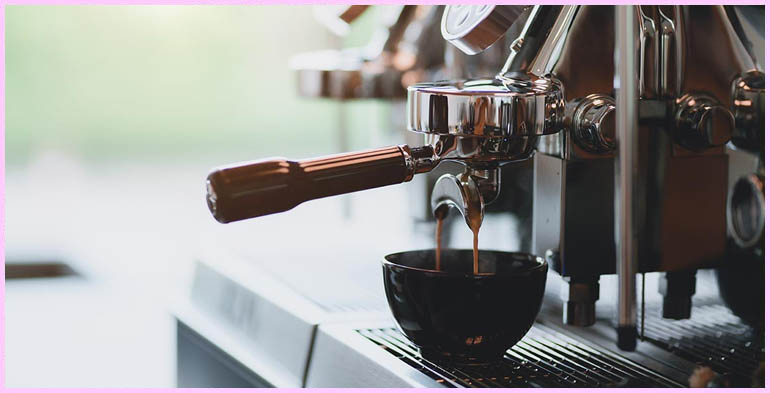
Coffee contains caffeine (just like tea, but it's called theine even though it's the same molecule). In mammals, caffeine acts as a stimulant of the central nervous system and the cardiovascular system, temporarily reducing drowsiness and reaction time, and increasing attention. In fact, caffeine is the most widely consumed psychoactive substance in the world and is legal in all countries.
The oldest method for decaffeinating coffee was to use a specific solvent, usually chlorinated. This method has been used for years but is tending to be abandoned due to health reasons (residual traces of solvents), environmental impact, cost, and flavor. A carbon dioxide extraction method is increasingly used. The extraction process is simple: CO2 is forced through the coffee beans at temperatures above 31.1°C and pressures above 73 atm. Under these conditions, CO2, which is in a supercritical state, has specific properties: on the one hand, those of a gas, which allows it to penetrate deep into the coffee beans, but also those of a liquid that dissolves 97-99% of the caffeine. The caffeine-laden CO2 is then passed through a high-pressure water jet to remove the caffeine.
A coffee labeled "decaffeinated" isn't actually completely decaffeinated; for most brands, five cups of "decaffeinated" coffee provide a caffeine dose equivalent to one cup of caffeinated coffee, according to a North American study that tested coffees from nine brands.
I'm a fan of high-pressure coffee (espresso), even when traveling far east. I like to enjoy an oriental coffee while admiring the waves of the Bosphorus or the endless activity of Istanbul's Grand Bazaar.
At home, I use an Italian Grimac brand machine (My previous machine was already a Grimac which served me faithfully for years, I found it to be excellent value for money, and the new one has satisfied me just as much for 6 years. For practical reasons, I generally use "ESE pods", small flat paper capsules quite common in Italy (but just as common on Amazon) containing 7 grams of ground coffee. I make sure to always have several types of coffee available according to my desires and those of my guests when they know enough about it:
In terms of coffee brands, I really like the Kimbo brand, typical of Neapolitan coffees, but I recently discovered Caffè Borbone and I'm quite charmed by anything that's a bit strong (Southern Italian type...). Lamborghini coffees are also quite nice.
