When we talk about the gluteus muscle, we should actually be talking about THE gluteus muscles. Our buttocks are actually more complex than they seem! Our posterior is made up of 3 muscles, also known as gluteal muscles: the gluteus maximus, the gluteus medius, and the gluteus minimus. It's important to know this information because you'll need to activate these 3 muscles during your workouts if you want to firm up your buttocks and give them the desired shape! While a well-muscled gluteus maximus will give the buttocks their volume, the gluteus minimus and medius will help give them a nice shape.
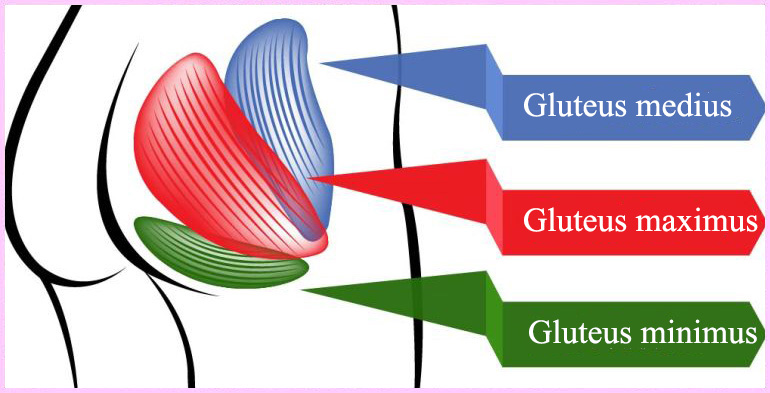
Let's not kid ourselves: the first benefit sought when trying to tone your glutes is often aesthetic! But you should know that a muscular glute brings much more than sex appeal. Thus, the gluteal muscles are used during many movements: running, jumping, walking, standing up, sitting... However, many people have office jobs, which require them to sit for long periods. When not used, the glutes gradually lose mass and end up no longer being strong enough to properly support the balance and function of the legs. Other muscles then take over and do some of the muscular work that should be done by the glutes. The problem: these "compensatory" muscles are not designed for such activity. Over time, this muscular imbalance can lead to pain and discomfort in the rest of your body, particularly in the knees and lower back.
1)There are no exercises specific to women or men when it comes to building muscle. Everyone is different, and both men and women who want to tone their glutes should think about adapting the choice of exercises to their goals and their anatomy (shorter or shorter legs, wider or narrower pelvis, joint discomfort, physical condition) rather than their gender. However, be aware that on average, women recover twice as quickly as men.
2) There's no miracle exercise that will tone your glutes in just a few days. If you exercise this area of your body regularly (2 to 3 times a week), you should feel the first results after about a month. They'll be slight and subtle, but they'll be there! Still, allow between 4 and 6 months to see truly noticeable results. Take a photo of your glutes at the beginning of each month. The before/after effect should help motivate you!
3) By practicing an exercise that uses certain muscles, you send a message to your body: “I need more power, strengthen this muscle!” The body will then begin an adaptation process by creating additional muscle tissue and repairing micro-injuries inflicted on the muscle. Rest assured, these micro-injuries are natural after unusual and demanding muscle use! They are what cause muscle soreness. To “repair” your muscles, your body will need building blocks: energy, proteins, and certain amino acids. Therefore, to strengthen your glutes, you will need to be patient, regular, and adopt a diet adapted to your new needs (You need proteins: Meat, Eggs, oilseeds, legumes, etc.).
4) Never neglect warming up. The goal of a warm-up is to prepare your body for exercise. It increases your body temperature, stimulates blood circulation, and awakens your muscles. For your glutes, simply walk for 10 minutes or go for a light jog before starting.
Start :
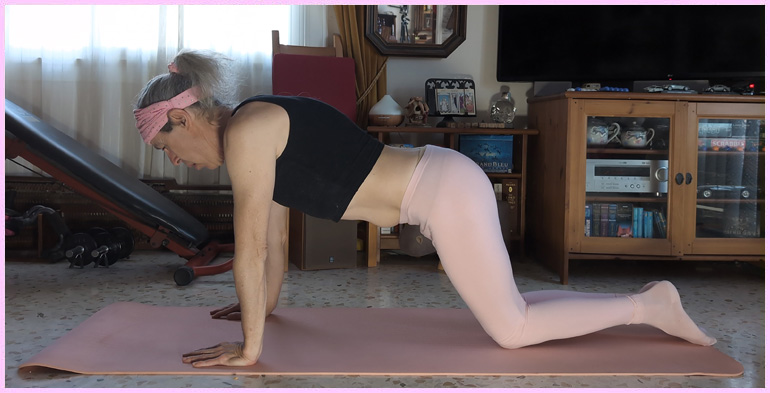
We start on all fours on the floor mat.
Movement :
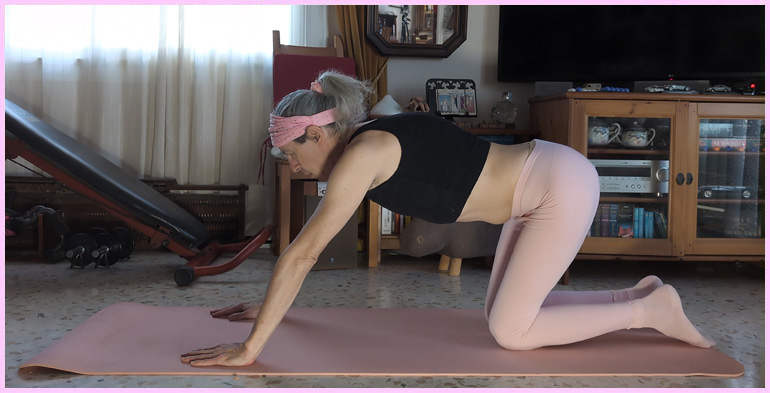
The warm-up is done by rotating the torso clockwise after sending it to start forward. We will therefore shift to the right while moving backwards then continue to move backwards while returning to the axis. We return to the front by shifting to the left this time then return to the starting point and continue this circular movement for 30 seconds. The movement must be slow and regular. We then turn in the other direction for another 30 seconds before returning to the central position on all fours.
 |
 |
a
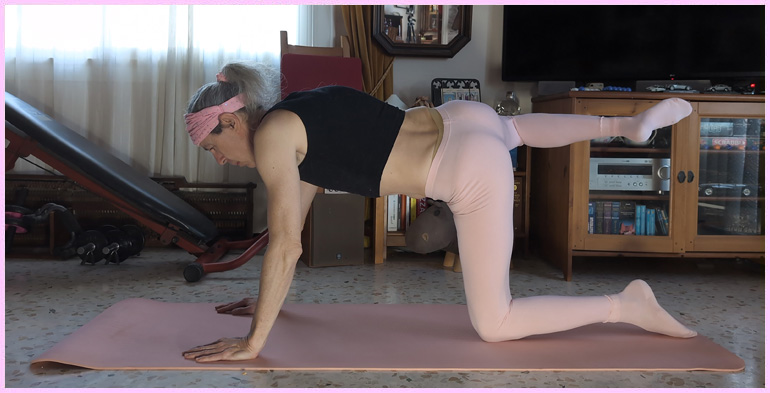
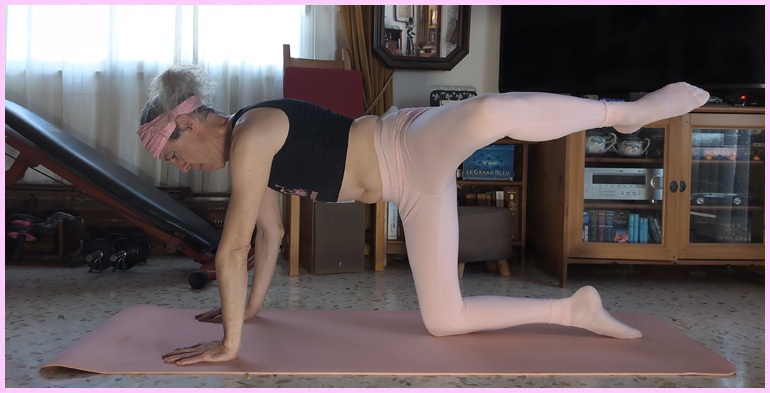
We're going to do a series of exercises on the right leg, which we'll then repeat with the left leg. The first exercise, called Fire Hydrant, is a hip abduction exercise. This exercise is perfect for strengthening the gluteus medius and achieving round, shapely buttocks.
Start :
We start on all fours on the floor mat.
Movement :
The fire hydrant consists of starting from the quadrupedal position with the wrists vertical to the shoulders, keeping the leg bent at 90 degrees and raising the knee to the side at hip level (a bit like a dog going to urinate against a wall), then lowering it slowly to return to the starting position, avoiding twisting the torso and neck (For example in the photo where I have my right leg raised, the dorsal twist is not good, the back should be much flatter!).
Advice :
There is no swaying or rotation of the upper body; you should spread your free leg bent at 90°. Your spine should remain straight and parallel to the floor.
Action :
Perform 2 sets of 10 repetitions with the working leg.
 |
 |
a
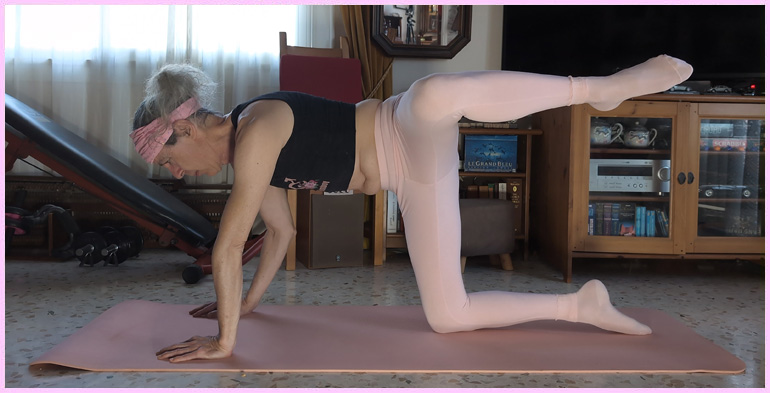
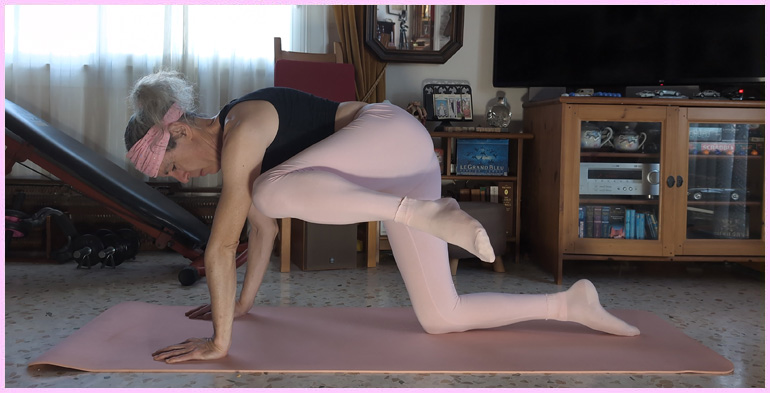
The second exercise is also a hip abduction exercise. It differs from the first by a rotational movement of the knee forward and then downward as the leg lowers.
Start :
We start on all fours on the floor mat.
Mouvement :
The rotating fire hydrant consists of starting from the quadrupedal position with the wrists vertical to the shoulders, keeping the leg bent at 90 degrees and raising the knee to the side at hip level (a bit like a dog going to urinate against a wall), then lowering it slowly by bringing the knee forward before sending it back in the second part of the descent in order to return to the starting position.
Advice :
There is no swaying or rotation of the upper body; you should spread your free leg bent at 90°. Your spine should remain straight and parallel to the floor.
Action :
Perform 2 sets of 10 repetitions with the working leg.
 |
 |
a
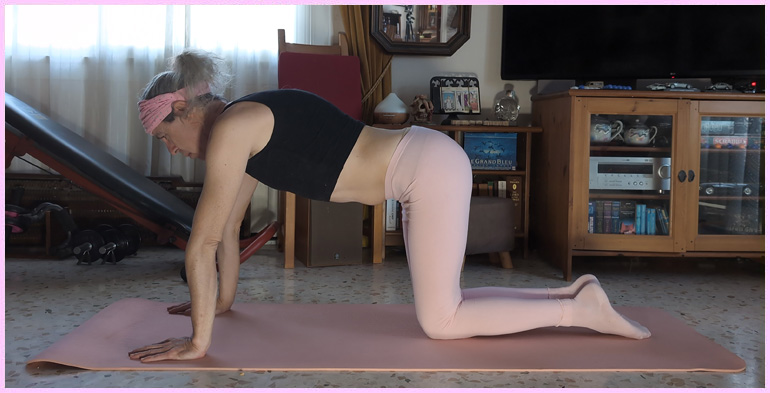
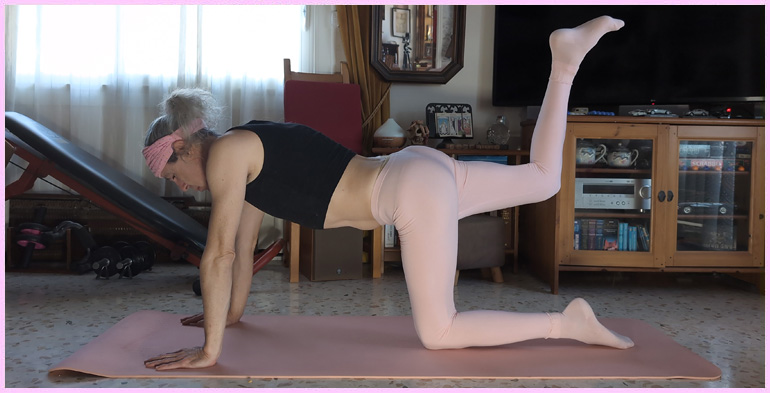
This third exercise is an exercise that targets the glutes.
Start :
On commence à quatre pattes sur le tapis de sol.
Movement :
We will raise the thigh horizontally while maintaining the 90° angle between the thigh and the leg that we have at the start. So when the thigh reaches the horizontal position, the leg points vertically upwards.
Advice :
Perform long, controlled movements. You should feel your glutes working, otherwise your position is bad.
Action :
Perform 2 sets of 10 repetitions with the working leg.
 |
 |
a
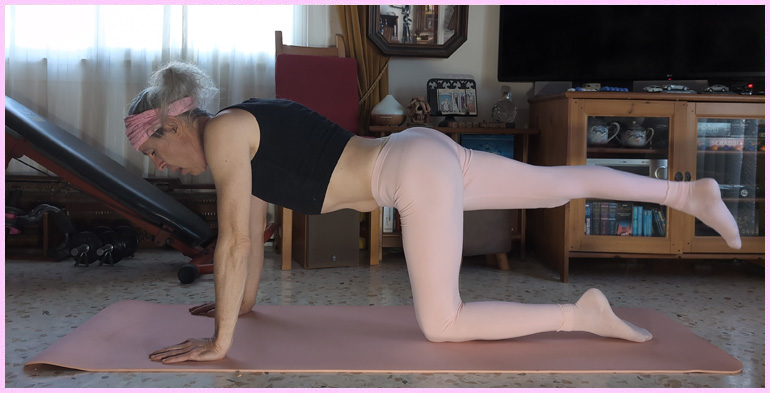
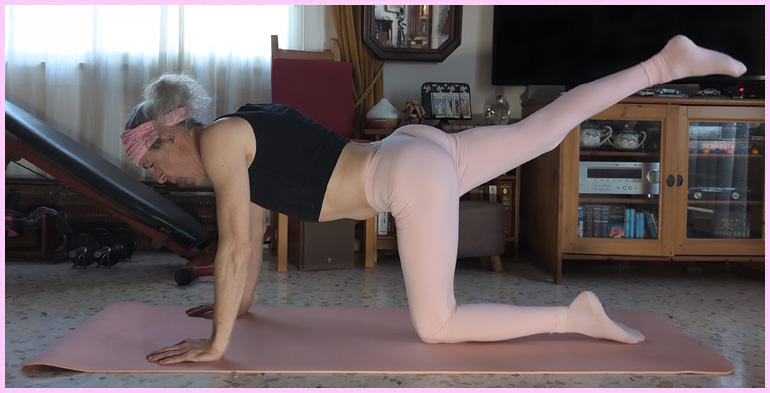
The fourth exercise is an exercise that falls under the "muscle development" category and specifically works the three gluteal muscles. A little bonus of this exercise is that it simultaneously works the abdominal muscles (large and small obliques) and the lumbar muscles (lower back).
Start :
We start on all fours on the floor mat.
Movement :
We will raise the thigh and the leg horizontally (contract your abdominals to be sure not to arch your spine). Keeping the leg straight, without pausing, it is then a question of raising it as high as you can while keeping the foot “flexed”, that is to say with the tip stretched towards the ground (and not in the extension of the leg). By maintaining a good position thanks to your abdominals and by contracting the buttock of the leg to be raised, you accelerate your results.
Advice :
There's no need to raise your leg too much; this will prevent you from arching your back too much and causing pain. Be careful not to "break" your neck by looking straight ahead; you're looking at the floor. Your head and back should stay aligned, and your back should remain flat.
Action :
Do 2 sets of 15. At the end of each set, finish with the position held for about ten seconds (Isometric work). Maximum break of 20" between the 2 sets.
 |
 |
a
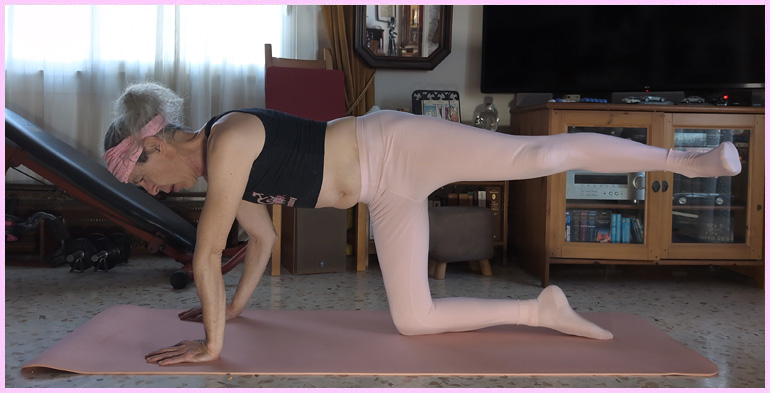
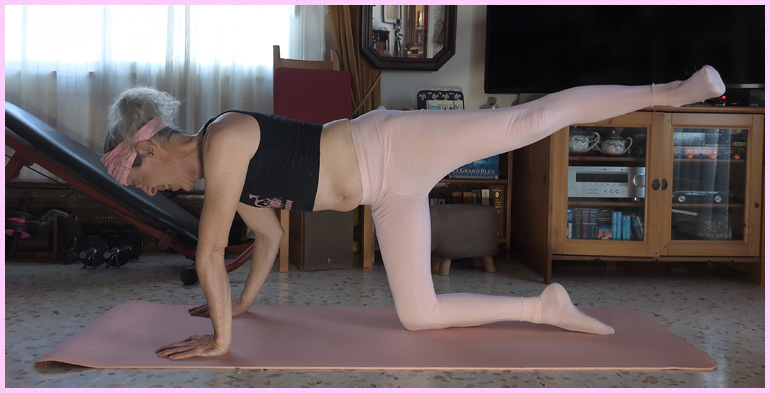
The fifth exercise is the same as the previous one except that the foot should be horizontal, toes outwards.
Start :
We start on all fours on the floor mat.
Movement :
We're going to raise the thigh and leg horizontally (contract your abs to make sure you don't arch your spine). Keeping the leg straight, without pausing, then raise it as high as you can while keeping the foot turned outwards.
Advice :
There's no need to raise your leg too much; this will prevent you from arching your back too much and causing pain. Be careful not to "break" your neck by looking straight ahead; you're looking at the floor. Your head and back should stay aligned, and your back should remain flat.
Action :
Do 2 sets of 15. At the end of each set, finish with the position held for about ten seconds (Isometric work). Maximum break of 20" between the 2 sets.
 |
 |
a
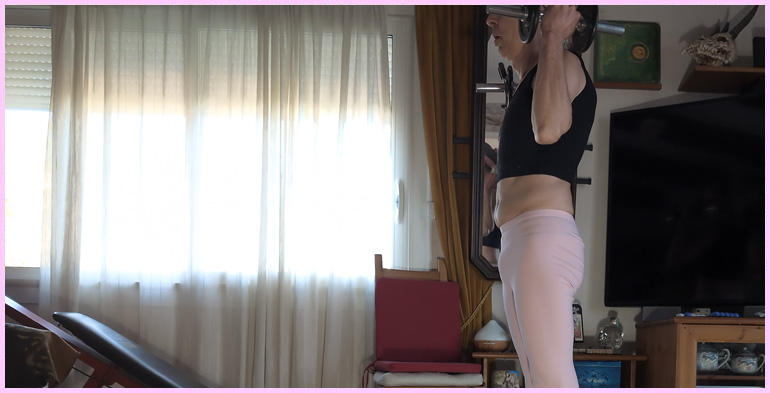
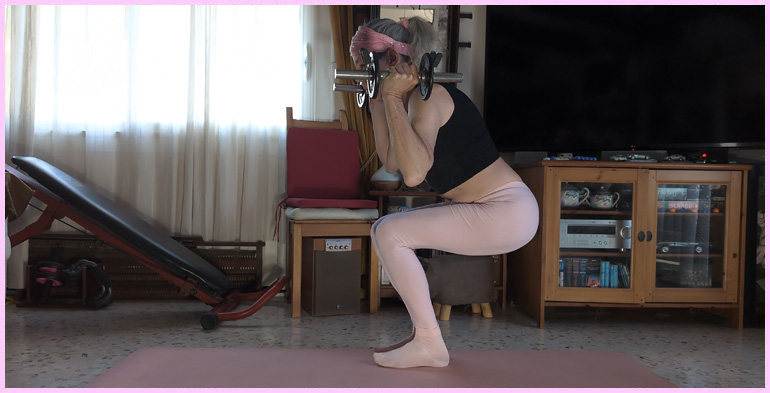
The sixth exercise is a great classic for working the glutes, the Squat.
Start :
We start standing, holding 2 dumbbells at shoulder height (4 kg per dumbbell in my case).
Movement :
We will start by doing the movement we perform to sit down (Be careful not to go forward to protect the knees, it is the buttocks that go backwards!).
Advice :
Once seated, make an effort to hold the position for a few seconds before getting up. The movement should not be sudden but regular.
Action :
Do 2 sets of 10 squats
 |
 |
a
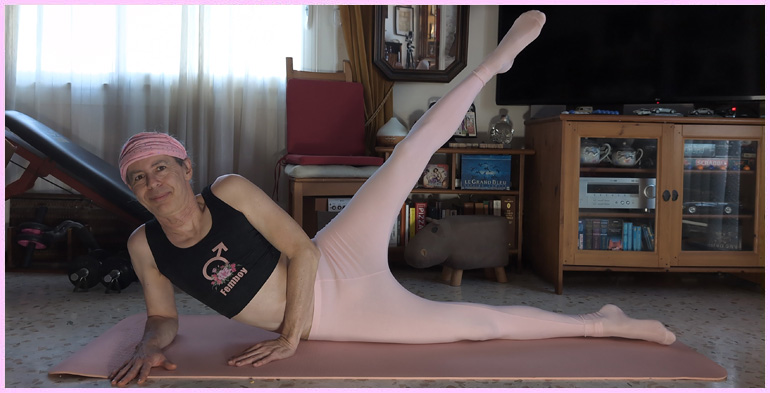
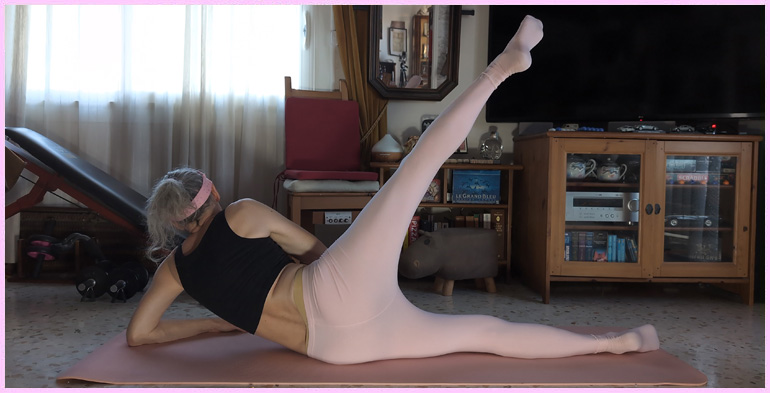
The seventh exercise falls into the “muscle development” category and specifically works the gluteus medius.
Start :
We start lying on one side, using our arms to maintain balance.
Movement :
Lying on your side, using both arms to stabilize yourself, your legs are straight, placed one on top of the other. You lift your top leg toward the ceiling and bring it back down without placing it on the other leg. You must reach as high as possible.
Advice :
To add extra work and strengthen your core, try using only one hand to support your weight, while the other arm is extended alongside your body.
Action :
Do 3 sets of 10 per leg. At the end of each set, finish with the position held for about ten seconds (Isometric work). Maximum break of 30" between the 3 sets.
 |
 |
a
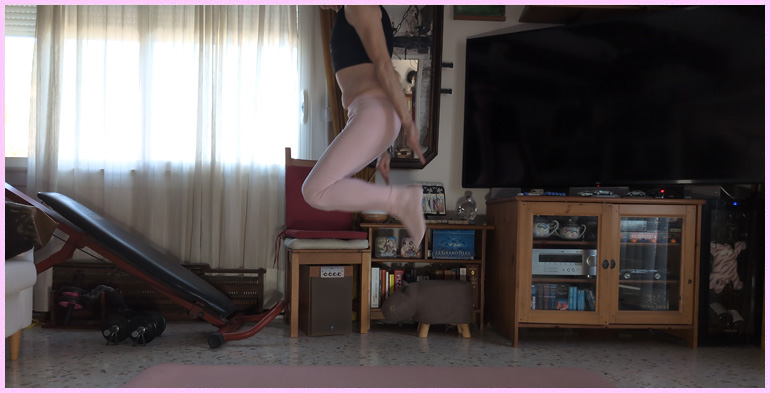
The eighth exercise is a pretty nasty version of the Squat.
Start :
We start standing up.
Movement :
We will start by doing the movement we perform to sit down (Be careful not to go forward to protect the knees, it is the buttocks that go backwards!). Once in the seated position, we propel ourselves upwards and jump in the air. And we continue... Excellent for cardio!
Advice :
When jumping, we help ourselves by throwing our arms downwards.
Action :
Do 2 sets of 10 Squats (I drop to 7-8).
 |
 |
a
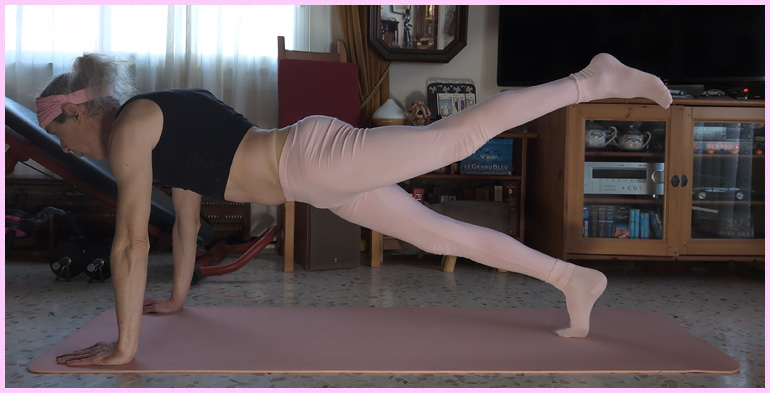
The ninth exercise works the entire glutes.
Start :
Stretched and back straight, resting on the toes and arms outstretched (Bear Plank)
Movement :
Stretch your right leg well back, hold the position for a few seconds then come back and do the same with the left.
Advice :
Keep your back straight and hold each high leg position for 2 seconds.
Action :
Raise each leg 15 times alternately (15 times the left leg and after, 15 times the right).
 |
 |
a
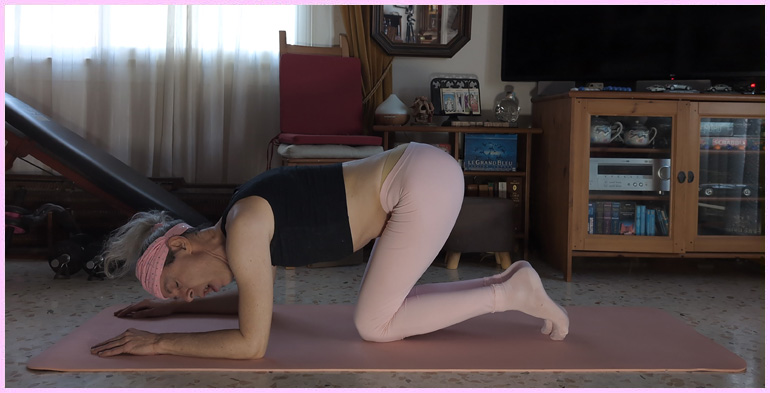
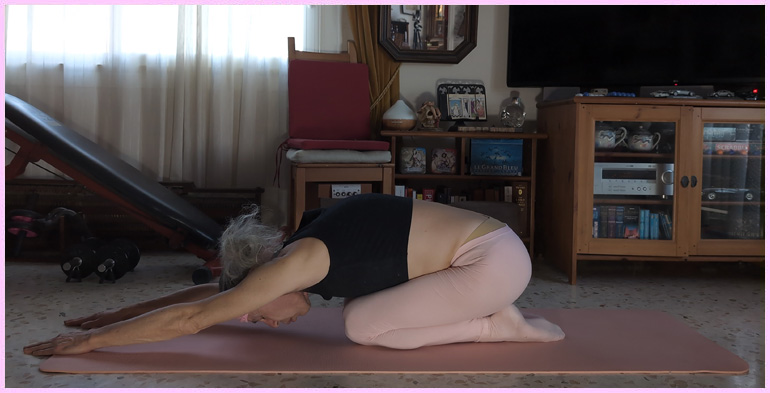
Stretching is very important to limit pain the next day if you have worked well.
Start :
On all fours
Movement :
We sit on our heels and then let the wind rest on our thighs. We pull our arms as far forward as possible and stay in this position for a while.
Advice :
Control your breathing rate. This is the recovery period.
Action :
Repeat the first stretch three times.
 |
 |
a
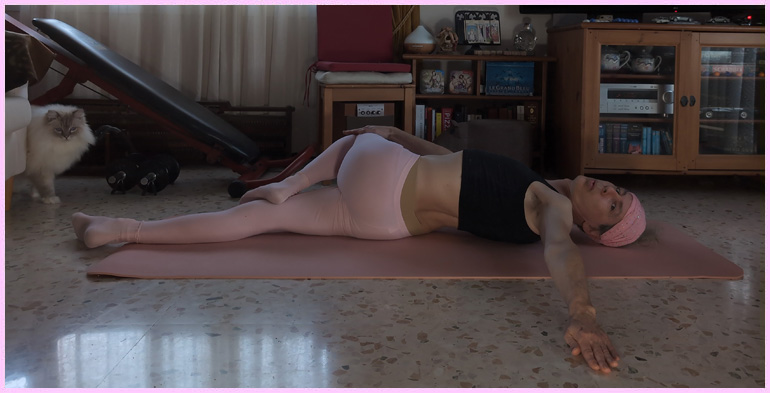
Stretching is very important to limit pain the next day if you have worked well.
Start :
Lying on your back
Movement :
The pelvis rotates to the right and the left leg bends so that the left foot rests on the right knee. The right hand is positioned on the left knee. The left arm extends horizontally and the neck is turned to look towards the left hand. Stay like this for a short while, feeling the stretch.
Advice :
Control your breathing rate. This is the recovery period.
Action :
Repeat the stretch in the opposite direction (pelvis rotated to the left).
 |
 |
a
a
Thanks to my cat for this awesome "photo bomb" on the last stretching picture! ;-)
