Genoa pesto (in Italian, pesto alla genovese) is a traditional sauce from the Genoa region of Liguria. It is a very fragrant blend made from fresh basil (preferably Genoese DOP basil), pine nuts, grated Parmesan cheese (or a mixture of Parmesan and Pecorino), garlic, extra virgin olive oil, and salt. Traditionally, pesto is prepared in a mortar to preserve all the delicate flavors, although today many use a blender to speed things up.
Pesto has its roots in Roman tradition. The ancient Romans prepared a sauce called moretum, made with herbs, garlic, cheese, olive oil, and sometimes vinegar. It was crushed in a mortar, just like pesto today. Pesto as we know it today appeared in Genoa, probably around the 19th century. It was first mentioned in a recipe book in 1863, written by Giovanni Battista Ratto.
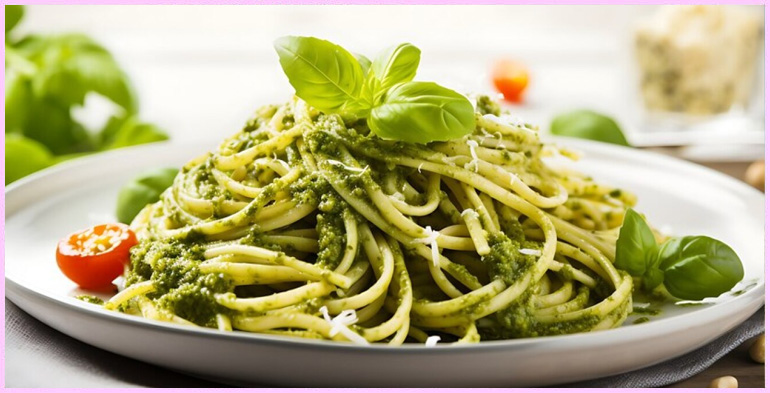
Pesto goes best with certain types of pasta that "grab" the sauce well. Traditionally in Liguria, people mainly use Trofie (small hand-twisted pasta, perfect for capturing the pesto in their spirals; you could use the classic Fusilli, which is twisted), Linguine (long and thin, they hold the pesto well thanks to their slightly rough surface; you can use spaghetti by default), but also potato Gnocchi, whose soft and fluffy texture goes really well with the freshness of the pesto.
It's very rare, but for once, I'm going to advise you to buy rather than make it! Why? Firstly, you should know that not all basil is equal. The one from the Genoa region is very fragrant, which is an obvious advantage, but if you don't live in Liguria, you'll have a hard time finding really fresh basil! Secondly, real pesto is prepared with a pestle, not a blender. The pestle doesn't just tear the leaves like a blender, it also combines the elements together through the pressure exerted.
But here's the thing: you still need to have a marble mortar and a fruitwood pestle at home. And the time to use it because preparing pesto the old-fashioned way requires time and energy! That's why this is one of the rare cases where I prefer to buy the ready-made product. But be careful! I'm not talking about supermarket pesto, let's be clear! I recommend artisanal pesto, which you'll recognize by its price (It's more expensive, let's not lie, it's between double and triple the price BUT we're talking about a small amount of money and believe me, it's worth it!)
Always look at the composition of your pesto, ideally you will see that there are only five ingredients (6 including salt) and nothing else: Basil, Olive Oil, Pine Nuts, Parmesan (Or Parmesan/Pecorino mix) and Garlic.
Pesto should NEVER be heated directly in a pan! It would lose its fresh taste and delicate aromas. Personally, I heat a sauté pan with a tiny bit of olive oil during the last minute of cooking the pasta. Once the pasta is drained, I turn off the heat under the pan, add the pasta, pour in the pesto (which can be stored at room temperature as long as the jar is not opened, hence the advantage of having small jars), mix and serve immediately. Traditionally, pesto pasta does not need to be topped with grated cheese after mixing, because the cheese (Parmesan or Pecorino) is already in the pesto itself. Depending on your taste, you can dilute the pesto in a little pasta cooking water.
Pesto is a beautiful green in color due to its ingredients. But there is also red pesto. The latter comes from Sicily (pesto alla siciliana) and its recipe includes less basil but an additional ingredient: sun-dried tomatoes. As is customary in the South, chili pepper is also often added, but not always. It goes very well with short pasta (short pasta like Penne or Fusilli...).
