| Amatriciana (View) Prosciutto, Tomatoes, Pepper |
Arrabiata (View) Garlic, Tomatoes, Chili Pepper |
Carbonara (View) Guanciale, Eggs, Cheese |
| Cenere (alla) (View) Gorgonzola, Liquid cream |
Genovese (View) Pesto (Basilic, Pine nuts, Garlic, Cheese) |
Piedmonte (view) Chesnuts, Mushrooms, Cream |
| Salsiccia e Peperoni (view) Chipolata, Tomatoes, Bell pepper |
Strombolana (view) Tuna, Tomatoes, Chili Pepper, Capers, Olives |
Toscana (View) Sausage, Tomatoes, Fennel seeds |
Pasta seems so deeply rooted in Italian culture that it's hard to believe its origins lie elsewhere. And yet... Let's start by dispelling a legend that claims that pasta was brought to Italy from China by Marco Polo. This is completely ridiculous, since there is ample evidence that, as early as Roman times, pasta was eaten in what would become Italy, boiled or cooked directly over flames in the form of 'lagana,' sheets of pasta cut into large squares. This kind of ancestor of lasagna was eaten in leek and lentil soups.
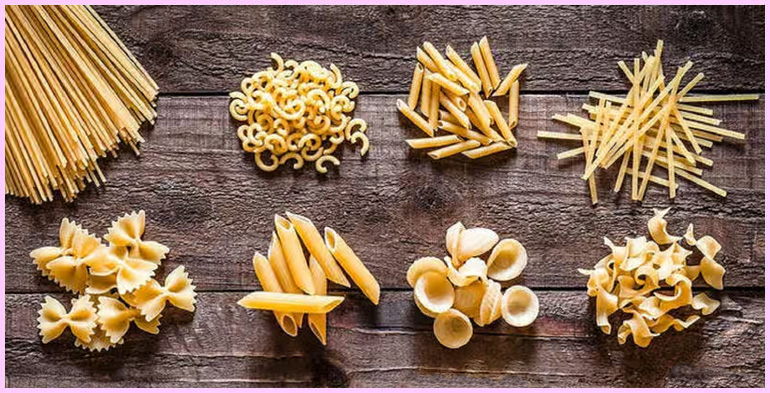
So, Would Marco Polo have brought dried pasta back from China? No, since there's also compelling evidence that dried pasta arrived in Italy via Arab traders in the 9th century when they conquered Sicily. So this legend could have come completely out of nowhere? That would be strange... For Giorgi Franchetti, a culinary historian, "The noodles Marco Polo brought back from China had nothing to do with classic Italian pasta; they were made from rice, and it was this characteristic that justified bringing them back as a curiosity."
In fact, the origin of pasta is very ancient. The oldest written record is found on tablets from Babylon dating back to 1700 BC. They mention the making of ‘risnatu’ (in Akkadian) or ‘bappiru’ (in Sumerian) with wheat flour and water. But researchers date the origin of pasta back to the Neolithic period, around 9000 BC, and every civilization with wheat would have quickly found a similar recipe. This first form of pasta is called ‘crumbled pasta’. Wheat flour was mixed with water to form a ball of dough, which was left to dry and then crumbled into a consommé (a soup made from meat stock) or into milk, which was boiled. This method is found in China around 4000 BC (China is undoubtedly the second homeland of pasta) as well as in ancient Rome, where it is called 'Tracta'. This method is still used today in Italy with 'pasta grattugiata', but also in Alsace to make 'Spätzle'!
Some civilizations codified the way dough was crumbled. For example, the Berbers of the Middle Ages rolled it under the palms of their hands until it was reduced to the size of ant heads, which were then sifted through several sieves to calibrate them. Steamed, not boiled, this would produce 'couscous'.
In Greco-Roman literature, 'laganum' generally refers to a thin dough obtained by lamination (The lamination process involves compressing something between two oppositely rotating cylinders called rolling mills). 'Lagana' are the ancestors of lasagna, which is etymologically derived from it. Lagana are used to prepare dishes based on alternating layers of 'lagana' and a moist filling composed of various meats (chicken, pork, fish) mixed with eggs and topped with a sauce made from 'garum' (fish brine), wine and olive oil. These early lasagnas had the particularity of being baked in a crust, like a pâté.
During the Abbasid era (750-1258), Arab-Persian cuisine used lagana by cutting it with a knife into more or less narrow strips (like tagliatelle). The pasta was then cooked in a spicy, fatty meat broth over low heat, long enough for it to absorb liquid and fat. These were the first "stewing" pasta (al ragù in Italian).
Drying pasta allows it to be transformed into a practical and easy-to-use preservation product. The nomadic populations of the Arabian Peninsula and North Africa are at the origin of the preparation of dried pasta, hanging threads of pasta on clotheslines to dry them in order to preserve them longer (this is the origin of tube-shaped pasta with a hole in the middle!). The production of dried pasta was introduced in Palermo (Sicily) during the Arab occupation (Emirate of Sicily from 831 to 1091). For information, the word 'spaghetti' comes from the Arabic language and means thread or string.
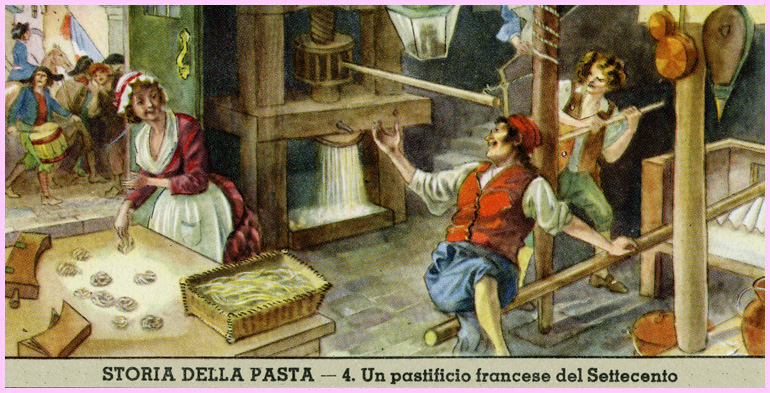
The first pasta factories are said to have appeared in Naples, where the climate provided ideal ventilation and humidity conditions for drying. Drying, which allows for long-term preservation, is carried out using a stream of warm, humid air that gradually lowers the food's water content. This process is very delicate because if it is done too slowly, the pasta can mold, and if the process is carried out too quickly, it can crack or become brittle.
For a long time in Western Europe, dried pasta was referred to by a Neapolitan word derived from Etruscan: 'makaronia'. Catherine de Medici introduced this Italian specialty to France when she married King Henry II in 1533.
All that said, one indisputable fact remains: Today, the biggest consumers of pasta are Italians. Six out of ten Italians eat it every day, and with 23 kilos consumed per person per year, Italy is the world's largest consumer of pasta, according to a September 2020 study by Doxa. This is followed by Tunisia (16 kg) and Venezuela (12 kg). The figure for the USA is 9 kg, for France 8 kg, same figure for Germany but for England only 3.5 kg.
Pasta recipes can generally be made with either fresh or dried pasta. Fresh pasta has a more tender texture and is often softer in the mouth due to the presence of eggs and higher hydration. It cooks much more quickly than dried pasta, usually within a few minutes. However, fresh pasta has a short shelf life and must be stored in the refrigerator...
Contrary to popular belief, fresh pasta is not always of better quality than dried pasta. Quality depends primarily on the ingredients used and the manufacturing process. Artisanal dried pasta made from high-quality durum wheat can be far superior to industrially produced fresh pasta.
Unless otherwise duly noted and explained, the pasta must be drained "al dente" and then poured directly into the container in which the sauce was prepared (so we have provided a container large enough to do this...). The pasta and sauce are mixed in this container over the heat for a few seconds, allowing the sauce to blend with the pasta, before serving the plates. If the sauce is too dry, it is diluted with a little pasta cooking water just before draining. In Italy this step is called the 'padella'.
There are a few essential cheeses you should know. First, be aware that there's a geographical link between the recipe and the cheese used. Furthermore, grated cheese is only sprinkled on pasta at the table, not before, so that its flavor doesn't overpower the sauce and everyone can add it to their liking. Clearly, freshly grated cheese is better than pre-grated cheese. Finally, please note that cheese and fish never meet in a proper Italian recipe.
While I'm discussing the most internationally renowned cheeses here, don't let that obscure the fact that Italy is "the other cheese country," with hundreds of local specialties that are truly worth discovering.
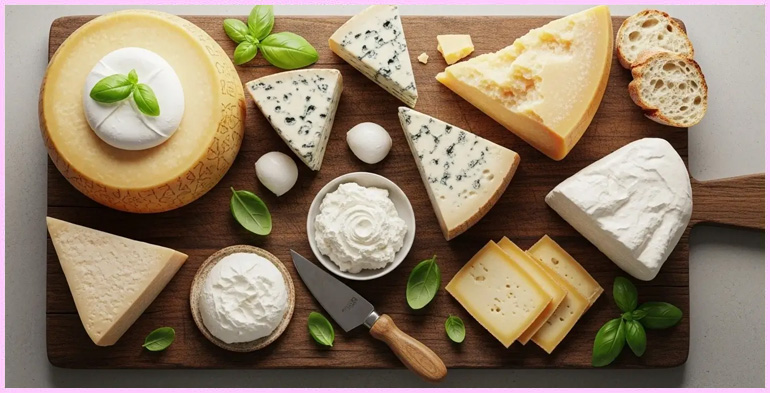
Parmigiano Reggiano is a hard, cooked Italian cheese from the 'Grana' family, made with cow's milk in a limited area of Emilia-Romagna, south of the Po River, near Parma and Reggio Emilia (hence the name, which simply means "the cheese of Parma and Reggio"). With 3.8 million wheels produced annually, it is the third most produced Italian cheese after Grana Padano and Gorgonzola.
Parmigiano Reggiano is typically grated over pasta dishes, mixed into soups and risottos, and eaten on its own. It is often shaved or grated over other dishes such as salads. It is a cheese that ages well, and the small white grains characteristic of Parmesan are tyrosine crystals, an amino acid that gives it its distinctive flavor. They provide an indicator of the ripening time because they increase in number and size over time.
Grana Padano is a traditional Italian hard cheese made from cow's milk, produced in the valleys of northern Italy. Its production area is different and significantly larger than that of Parmigiano-Reggiano (which is the most produced cheese in Italy). Unlike Parmigiano-Reggiano, which requires only grass and hay, Grana Padano does not have strict regulations regarding the cows' diet. Often mistaken for "the same thing" by beginners, Grana Padano is less expensive and less distinctive than Parmigiano-Reggiano, which is generally preferred. The name "Grana" refers to this type of hard cheese made from cow's milk, and "Padona" refers to the Po Valley.
Gorgonzola is the protected designation of origin for a traditional blue cheese made from cow's milk in the Lombardy and Piedmont regions of Italy. The name originates from the practice of rounding up cattle herds in the Gorgonzola area at certain times of the year. The milk obtained was then transformed into a blue cheese through aging in natural rock caves rich in specific strains of mold, such as Penicillium glaucum.
Gorgonzola can be enjoyed in various ways. It can be melted into a risotto during the final cooking stage, or paired with a pear (a truly divine combination). Another common practice is to serve it with polenta. Thanks to its distinctive flavor, it is occasionally used as an ingredient in pizzas (as one of the four cheeses in the quattro formaggi). It is also sold mixed with white mascarpone for creamier sauces.
Mozzarella is a traditional stretched-curd cheese made from cow's or buffalo's milk (mozzarella di bufala). A buffalo is the female of the water buffalo. Be aware that outside of Italy, mozzarella is an industrial cheese and one of the most produced and consumed cow's milk cheeses, which creates confusion with traditional mozzarella, whose taste, as you can imagine, is completely different!
Mozzarella is produced throughout the southern half of Italy. Its name comes from a specific stage in its production process. After the stretching stage, the curd is "mozzata," meaning it is cut into marketable pieces.
It can be eaten plain, raw or cooked, and is used in many salad, pasta, and pizza recipes.
Burrata is a traditional Italian stretched-curd cheese from Puglia, made from mozzarella and filled with cream.
Last of the major Italian cheeses in terms of production volume, Pecorino Romano is a traditional, cooked, pressed cheese made from whole sheep's milk, primarily from the Lazio region of Italy. Other Pecorino varieties (Sardo, Siciliano, Toscano, etc.) also made from sheep's milk exist, but they are less readily available in France.
You'll understand that, being a sheep's milk cheese and not a cow's milk cheese, saying it's "like Parmesan" makes absolutely no sense! If we sometimes hear this strange statement, it's because some people are content with industrially produced, entry-level cheeses which, admittedly, are often characterized by a lack of taste and character, making them interchangeable. However, they shouldn't be substituted; they should simply be replaced with genuine regional products!
