The Bloody Mary is one of the most famous cocktails in the world, known for its salty-spicy taste. Traditionally, the Bloody Mary is not a party cocktail like a Martini or a Mojito, but rather a daytime drink (it can be found on brunch menus in New York, London, Paris, etc.). It is known to relieve hangovers because the tomato juice provides vitamins and minerals, the spices "wake up" and the alcohol temporarily soothes (in reality, it's mostly a placebo effect, but that's part of its legend).
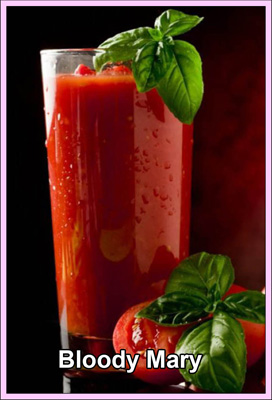 |
Classic recipePour 5 cl of vodka, 10 cl of tomato juice, 1.5 cl of lemon juice, 2 dashes of Worcestershire sauce, and 2 dashes of Tabasco into a highball glass filled with ice cubes. Add pepper and celery salt. Stir gently (do not shake, to maintain the texture) and adjust the seasoning to taste. |
The most common version attributes the invention of the cocktail to Fernand Petiot, a French bartender working at the famous Harry's New York Bar in Paris. Around 1921, he mixed vodka (then little known in the West) and tomato juice, a simple drink that would have appealed to American expatriates. Petiot would later say, "I invented it in Paris, then perfected it in New York."
When Petiot moved to work at the King Cole Bar at the St. Regis Hotel in New York in 1934, he improved the recipe by adding salt, pepper, Worcestershire sauce, lemon, and later Tabasco sauce. This is when the Bloody Mary became the spicy cocktail we know today.
The origin of the name "Bloody Mary" remains a mystery. Some believe it refers to Mary Tudor, the 16th-century Queen of England, nicknamed "Bloody Mary" for her persecution of Protestants. Others say it came from a barmaid named Mary who worked at a cabaret called the Bucket of Blood.
