The Boulevardier is a classic cocktail made with whiskey, sweet vermouth, and Campari, often considered the cousin of the Negroni (where the gin is replaced by whiskey). It's an excellent aperitif cocktail because the bitterness of the Campari stimulates the appetite. Not too sweet, it prepares the palate well. It is one of the official cocktails of the IBA (International Bartenders Association).
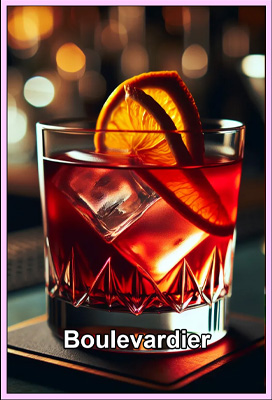 |
Classic recipePour 4.5 cl of Bourbon or Rye Whiskey, 3 cl of Red Vermouth, and 3 cl of Red Vermouth into a mixing glass. Stir and pour over ice into a chilled Old Fashioned glass. VariantThis cocktail is a cousin of the Negroni where Gin replaces Bourbon but in proportion 1/3, 1/3, 1/3 |
The cocktail first appeared in the 1920s, at the heart of the golden age of cocktails. It is attributed to Erskine Gwynne, an American writer and editor living in Paris. Gwynne had founded a monthly English-language magazine called "The Boulevardier" (aimed at American and British expatriates), which gave the cocktail its name.
The 1920s in Paris were marked by a strong presence of American artists and intellectuals (Hemingway, Fitzgerald, etc.), fleeing Prohibition in the United States. The Boulevardier reflects this spirit: a blend of European sophistication (vermouth, Italian amaro) and American robustness (whiskey).
The recipe can be found in "Barflies and Cocktails" (1927) by Harry McElhone, the famous bartender at Harry's New York Bar in Paris. McElhone describes the drink as 1/3 Campari, 1/3 Italian vermouth, 1/3 bourbon or rye whiskey. The proportions later evolved to 1.5:1:1 to soften the bitterness.
